
Wednesday, January 05, 2011
Big, complex, demanding, and competative
This was the title of the keynote address at the ALISE 2011 conference by Jorge Reina Schement of Rutgers. He made the point that within the current economic and social culture, academic departments within IHEs must educate both internal and external constituents regarding their value. A means of accomplishing this that he did not mention is scholarly communication.

Wednesday, May 19, 2010
Tuesday afternoon at TCDL...focus on ETDs
Tuesday afternoon I attended the ETD Forum which made the entire trip worthwhile. Laura Hammons of the Texas A&M University Graduate School facilitated the afternoon and provided a lot of great information. First, she's been instrumental in creating a group called TxETDA, the Texas ETD Association, which is dedicated to developing a network of support for ETD users in the state of Texas, providing a forum for professional development and sharing of best practices, promoting ETD submission at institutions throughout the state, and guiding future development of the TDL Thesis and Dissertation Management System, Vireo.
One of the things their education committee did was share best practices and share information about training and other resources outside of ETDA on their web page (above) and their blog which is located at http://txedta.wordpress.com/.
Another was to increase the visibility of the association through conference planning and creating links to other etd related groups.
Their listserv is at texas_etd_list@utlists.utexas.edu. They are also creating a list of institutions with links to grad schools and libraries who are doing ETDs. In collaboration with the Ohio ETD Association they're working to create a national ETD Association.
One of the things their education committee did was share best practices and share information about training and other resources outside of ETDA on their web page (above) and their blog which is located at http://txedta.wordpress.com/.
Another was to increase the visibility of the association through conference planning and creating links to other etd related groups.
Their listserv is at texas_etd_list@utlists.utexas.edu. They are also creating a list of institutions with links to grad schools and libraries who are doing ETDs. In collaboration with the Ohio ETD Association they're working to create a national ETD Association.
Tuesday morning at TCDL....ennhh
Ok, I'll admit it. Some of this is way over my head. And some of it is a bit on the dull side. This morning I heard four speakers. The first three were essentially updates on different pieces of the digital library puzzle that relate to the TDL. Chris Jordan spoke about the Texas Advanced Computing Center (TACC) which provides storage and preservation for TDL. Then Michael Phillips spoke about the Lonestar Education and Research Network (LEARN) which supports data transfer for TDL. Peter Nurnberg spoke about the TDL Preservation Network (PresNet). Reagan Moore from the UNC Chapel Hill School of Information and Library Science was supposed to give the closing keynote address but the technology failed (the laptop/projector combination stopped working) so he led a conversation on data management that was so technical that I was lost.
However, during the break between the first three speakers and the last I had the luck to meet folks from both TAMU-Kingsville and UT Brownsville who are at roughly the same point in TDL/IR installation & set up that we at TAMU-CC are. Both very nice, knowledgeable, and enthusiastic about collaborating. UT Brownsville is going to be holding a "TDL Day" for their faculty this fall and has invited me down for the event.
However, during the break between the first three speakers and the last I had the luck to meet folks from both TAMU-Kingsville and UT Brownsville who are at roughly the same point in TDL/IR installation & set up that we at TAMU-CC are. Both very nice, knowledgeable, and enthusiastic about collaborating. UT Brownsville is going to be holding a "TDL Day" for their faculty this fall and has invited me down for the event.
Monday, May 17, 2010
More from TCDL
This afternoon's sessions brought us up to date with the work that's going on at TDL. It's really pretty amazing.
A couple of faculty from the ISchool here at UT Austin, Unmil Karadkar and Luis Francisco-Revilla, suggest that one solution for meeting TDL's increased needs (financial, temporal, human resources) is to partner with other units on TDL campuses. Not to be confused with the beta versions of institutional IRs hosted by TDL e.g. http://labs.tdl.org/tamucc-ir, TDL Labs is a test bed for that collaboration. Among their ideas are research conducted by students and a collaborative matchmaking database where projects for which specific skills are needed would be matched with scholars at TDL institutions who possess those skills.
Peter Nurnberg, Chief Technology Officer for the Texas Digital Libraries, presented an update of progress on Vireo, TDL's electronic thesis and dissertation management software. Although not all TDL institutions are using Vireo, they have deployed Vireo lab instances for all TDL institutions in order to respond to requests for trials more quickly. Of the TDL institutions that are in production with Vireo, Texas
A&M and Texas Tech maintain their own Vireo servers, the rest are hosted at TDL and thus upgraded all at the same time and in the same way.
They’re going to put Verio into open source production on 1 September 2010. Both MIT and the University of Illinois Urbana-Champaign have signed on as developers/users and they’re in talks with the California Digital Library.
One of the really interesting things about this conference is learning a little more about the software development process and work flows for collaboration and momentum and development methodologies like kanban (used for Vireo) and scrum (used for TDL).
Finally, Mark McFarland, co-director of TDL, gave an update on TDL overall. He recapped some of what was included in the Vireo update and then moved on to several other TDL project. First, TxLOR (Texas Learning Objects Repository) will be “hardened” (that's a development term I learned that means settled on for sure) this summer and deployed this fall. Their other focus for the upcoming summer is the Preservation Network.
Mark also mentioned that TDL has signed a contract Texas Advanced Center for Computing which will provide them with 80 terabytes of storage (that's 1024 gigs per terabyte). They'll distribute this to TDL member institutions at a minimum of 8 TB for each Tier 1 institution, 4 TB for each Tier 2 institution and 2 TB for Tier 3 institutions. These minimum amounts will be included in each institution's membership fees. Additional storage will be available at an additional, but still deeply discounted prices.
They've also done some work on providing usage stats to TDL members. They’ve outsourced the development and plan to begin to integrate it into TDL over the summer. And finally, they’ve “gotten out of the business” of "hand holding" through the Shibboleth install process. Paul Caskey from LEARN is now providing Shibboleth support for TDL members.
A couple of faculty from the ISchool here at UT Austin, Unmil Karadkar and Luis Francisco-Revilla, suggest that one solution for meeting TDL's increased needs (financial, temporal, human resources) is to partner with other units on TDL campuses. Not to be confused with the beta versions of institutional IRs hosted by TDL e.g. http://labs.tdl.org/tamucc-ir, TDL Labs is a test bed for that collaboration. Among their ideas are research conducted by students and a collaborative matchmaking database where projects for which specific skills are needed would be matched with scholars at TDL institutions who possess those skills.
Peter Nurnberg, Chief Technology Officer for the Texas Digital Libraries, presented an update of progress on Vireo, TDL's electronic thesis and dissertation management software. Although not all TDL institutions are using Vireo, they have deployed Vireo lab instances for all TDL institutions in order to respond to requests for trials more quickly. Of the TDL institutions that are in production with Vireo, Texas
A&M and Texas Tech maintain their own Vireo servers, the rest are hosted at TDL and thus upgraded all at the same time and in the same way.
They’re going to put Verio into open source production on 1 September 2010. Both MIT and the University of Illinois Urbana-Champaign have signed on as developers/users and they’re in talks with the California Digital Library.
One of the really interesting things about this conference is learning a little more about the software development process and work flows for collaboration and momentum and development methodologies like kanban (used for Vireo) and scrum (used for TDL).
Finally, Mark McFarland, co-director of TDL, gave an update on TDL overall. He recapped some of what was included in the Vireo update and then moved on to several other TDL project. First, TxLOR (Texas Learning Objects Repository) will be “hardened” (that's a development term I learned that means settled on for sure) this summer and deployed this fall. Their other focus for the upcoming summer is the Preservation Network.
Mark also mentioned that TDL has signed a contract Texas Advanced Center for Computing which will provide them with 80 terabytes of storage (that's 1024 gigs per terabyte). They'll distribute this to TDL member institutions at a minimum of 8 TB for each Tier 1 institution, 4 TB for each Tier 2 institution and 2 TB for Tier 3 institutions. These minimum amounts will be included in each institution's membership fees. Additional storage will be available at an additional, but still deeply discounted prices.
They've also done some work on providing usage stats to TDL members. They’ve outsourced the development and plan to begin to integrate it into TDL over the summer. And finally, they’ve “gotten out of the business” of "hand holding" through the Shibboleth install process. Paul Caskey from LEARN is now providing Shibboleth support for TDL members.
TCDL 2010
So here I am at the Texas Conference on Digital Libraries in Austin, TX. It’s an interesting crowd in attendance. There are about 110 of us (intimate compared to ALA) including lots of computer scientist from the looks of the list of attendees. And lots of suits in the audience this morning. Wonder if they’re really administrative types with computer science “roots”?
Keynote speaker this morning is Leslie Carr, senior lecturer in the Intelligence, Agents, and Multimedia Group in the School of Electronics and Computer Science at the University of Southhamton, on the directions IRs have taken in the UK, Europe, Australia, and the US. He suggests that, in UK there is greater emphasis and requirement for institutions to take responsibility for accounting for the federal, public research funds that they receive. There’s a national research assessment process. He doesn’t see that emphasis being made in the US. The response is/was for repositories to position themselves as providing a catalog of research output. The advantage of this is that it positions the repository at the heart of the institution. The disadvantage is that it diverts the repositories’ attention to their original goal of providing open access to research results.
I guess I disagree, from the perspective of the US, I think the assessment side goes hand in hand with providing open access to research results to the people who really paid for it, the taxpayers.
Interesting closing idea, that librarians are mediating new practices, e.g. the creation of repositories, open access, and science 2.0, at the same time they are enforcing historic norms like copyright, privacy, and intellectual property.
Keynote speaker this morning is Leslie Carr, senior lecturer in the Intelligence, Agents, and Multimedia Group in the School of Electronics and Computer Science at the University of Southhamton, on the directions IRs have taken in the UK, Europe, Australia, and the US. He suggests that, in UK there is greater emphasis and requirement for institutions to take responsibility for accounting for the federal, public research funds that they receive. There’s a national research assessment process. He doesn’t see that emphasis being made in the US. The response is/was for repositories to position themselves as providing a catalog of research output. The advantage of this is that it positions the repository at the heart of the institution. The disadvantage is that it diverts the repositories’ attention to their original goal of providing open access to research results.
I guess I disagree, from the perspective of the US, I think the assessment side goes hand in hand with providing open access to research results to the people who really paid for it, the taxpayers.
Interesting closing idea, that librarians are mediating new practices, e.g. the creation of repositories, open access, and science 2.0, at the same time they are enforcing historic norms like copyright, privacy, and intellectual property.
Monday, March 01, 2010
Research tip
I have found a wonderful new icon in the Adobe Acrobat Reader (at least I think that's where it originates). I've been searching for publications in online databases and when I find an article I usually want to not only add it to my zotero library but I also want to download a copy for reading later. Now adding a citation to my zotero library has always been easy since I use version 2.0 that syncs between my computer at work and my laptop. But in order to have copies of the articles themselves on my laptop in the past I've saved a copy of the pdf to my hard drive at work then opened up an email and attached the article to it so I can open it on my laptop and download it. I know that doesn't sound all that cumbersome but it is. Now, however, with this new little icon in pdf docs I can email a copy of the pdf to myself without having to go to the trouble of downloading it, opening an email message, and attaching the file. I just click the 'email' icon within Acrobat, enter my email address, select the option to attach a copy of the article and hit send. It's almost as good as sliced bread!
Wednesday, January 27, 2010
Teaching and learning online
I just had a "water cooler conversation" with a colleague who was expressing her fear and hesitancy about participating in her first experience in an online class. She is a graduate student in a teacher education program and has had all of her classes so far in a face to face setting. The class is beginning their first group project and must conduct the entire experience in WebCT. She was particularly worried that the potential pitfalls of group work would be exacerbated by being conducted in an online setting.
I love teaching and learning online so I shared my experiences in online classrooms as both a student and a teacher with her. Particularly, I suggested that she set aside a small amount of time each day (its a four day project) to dedicate to "talking" to her group. The first day she might even want to take some extra time to get a feel for the online classroom and how it would work; how to post a message to her group mates and how to respond to a message. I explained the ways that asynchronous discussion can be different from synchronous discussion in a physical classroom, especially the way individuals' establish their presence or voice in an online environment. And I shared with her my experience that students (and teachers) online often feel much more comfortable participating in an online environment because the little bit of anonymity that online interactions lend that has a way of encouraging participation from students who are uncomfortable with participation in a face to face discussion. Finally, I said that I hoped she would begin to get a sense of what works and what doesn't work, what she likes and doesn't like, about online learning because that can be invaluable in the process of discovering how to teach effectively online.
It was a great conversation that both of us left feeling good about. She because she began to see the potential for enjoying working, learning, and teaching in online environments and me because I was able to share my good experiences and make her feel more comfortable.
I love teaching and learning online so I shared my experiences in online classrooms as both a student and a teacher with her. Particularly, I suggested that she set aside a small amount of time each day (its a four day project) to dedicate to "talking" to her group. The first day she might even want to take some extra time to get a feel for the online classroom and how it would work; how to post a message to her group mates and how to respond to a message. I explained the ways that asynchronous discussion can be different from synchronous discussion in a physical classroom, especially the way individuals' establish their presence or voice in an online environment. And I shared with her my experience that students (and teachers) online often feel much more comfortable participating in an online environment because the little bit of anonymity that online interactions lend that has a way of encouraging participation from students who are uncomfortable with participation in a face to face discussion. Finally, I said that I hoped she would begin to get a sense of what works and what doesn't work, what she likes and doesn't like, about online learning because that can be invaluable in the process of discovering how to teach effectively online.
It was a great conversation that both of us left feeling good about. She because she began to see the potential for enjoying working, learning, and teaching in online environments and me because I was able to share my good experiences and make her feel more comfortable.
Tuesday, January 26, 2010
Writing, blogging, and time
As I work on my dissertation I haven't been able to resist reading a couple of "how-to" books. Several of them insist that one does not necessarily need huge chunks of time in which to write. Instead, most suggest starting to write (or 'pre-write', that is taking notes from reading, creating outlines, etc.) in small chunks of time and then building up to longer periods slowly and as time permits. One reason for this is that rarely do we actually have large chunks of time in which to write (which makes finding them a means of procrastination).
This morning I read a blog from Inside Higher Ed in which the author discussed the relationship between blogging and teaching online and the amount of time he spends writing his blog: roughly 30 minutes per day. As a result of my reading I've been trying to do at least twenty minutes of dissertation writing everyday and, after reading this blog, it occurred to me that I tend to put off blogging because of the time it takes. This reasoning seems as faulty as reasoning that I need big chunks of time to write my dissertation. So although there will be days that I put off blogging for twenty or thirty minutes a day in favor of dissertation writing for twenty or thirty minutes a day (when I only have one twenty or thirty minute chunk of time to spend for instance), I'm going to try to work blogging into my daily writing routine.
These are some of my readings on dissertation writing:
Allen, George Richard. 1973. The Graduate Students' Guide to Theses and Dissertations; a Practical Manual for Writing and Research. San Francisco, Jossey-Bass.
Bolker, Joan. 1998. Writing Your Dissertation in Fifteen Minutes a Day: A Guide to Starting, Revising, and Finishing Your Doctoral Thesis. New York: H. Holt.
Dunleavy, Patrick. 2003. Authoring a PhD: How to Plan, Draft, Write, and Finish a Doctoral Thesis or Dissertation. Palgrave study guides;. Houndmills, Basingstoke, Hampshire ; New York: Palgrave Macmillan.
Foss, Sonja K. 2007. Destination Dissertation: A Traveler's Guide to a Done Dissertation / Waters, William Joseph Condon. Lanham: Rowman & Littlefield Publishers.
Glatthorn, Allan A. 1998. Writing the Winning Dissertation: A Step-by-Step Guide. Thousand Oaks, Calif.: Corwin Press.
Herr, Kathryn. 2005. The action research dissertation : a guide for students and faculty. Thousand Oaks Calif.: Sage.
Martin, Roy. 1980. Writing and Defending a Thesis or Dissertation in Psychology and Education. Springfield, Ill.: Thomas.
Mauch, James E. 1998. Guide to the Successful Thesis and Dissertation a Handbook for Students and Faculty. 4th ed. Vol. 58. Books in Library and Information Science ; V. 58. New York: M. Dekker.
Ogden, Evelyn Ogden. 2007. Complete Your Dissertation or Thesis in Two Semesters or Less. 3rd ed. Rowman & Littlefield Publishers, Inc., April 25.
Single, Peg. Demystifying dissertation writing : a streamlined process from choice of topic to final text. Sterling Va.: Stylus Pub.
Single, Peg Boyle. Career Advice: Demystifying the Dissertation - Inside Higher Ed Mobile. http://m.insidehighered.com/advice/dissertation.
This morning I read a blog from Inside Higher Ed in which the author discussed the relationship between blogging and teaching online and the amount of time he spends writing his blog: roughly 30 minutes per day. As a result of my reading I've been trying to do at least twenty minutes of dissertation writing everyday and, after reading this blog, it occurred to me that I tend to put off blogging because of the time it takes. This reasoning seems as faulty as reasoning that I need big chunks of time to write my dissertation. So although there will be days that I put off blogging for twenty or thirty minutes a day in favor of dissertation writing for twenty or thirty minutes a day (when I only have one twenty or thirty minute chunk of time to spend for instance), I'm going to try to work blogging into my daily writing routine.
These are some of my readings on dissertation writing:
Allen, George Richard. 1973. The Graduate Students' Guide to Theses and Dissertations; a Practical Manual for Writing and Research. San Francisco, Jossey-Bass.
Bolker, Joan. 1998. Writing Your Dissertation in Fifteen Minutes a Day: A Guide to Starting, Revising, and Finishing Your Doctoral Thesis. New York: H. Holt.
Dunleavy, Patrick. 2003. Authoring a PhD: How to Plan, Draft, Write, and Finish a Doctoral Thesis or Dissertation. Palgrave study guides;. Houndmills, Basingstoke, Hampshire ; New York: Palgrave Macmillan.
Foss, Sonja K. 2007. Destination Dissertation: A Traveler's Guide to a Done Dissertation / Waters, William Joseph Condon. Lanham: Rowman & Littlefield Publishers.
Glatthorn, Allan A. 1998. Writing the Winning Dissertation: A Step-by-Step Guide. Thousand Oaks, Calif.: Corwin Press.
Herr, Kathryn. 2005. The action research dissertation : a guide for students and faculty. Thousand Oaks Calif.: Sage.
Martin, Roy. 1980. Writing and Defending a Thesis or Dissertation in Psychology and Education. Springfield, Ill.: Thomas.
Mauch, James E. 1998. Guide to the Successful Thesis and Dissertation a Handbook for Students and Faculty. 4th ed. Vol. 58. Books in Library and Information Science ; V. 58. New York: M. Dekker.
Ogden, Evelyn Ogden. 2007. Complete Your Dissertation or Thesis in Two Semesters or Less. 3rd ed. Rowman & Littlefield Publishers, Inc., April 25.
Single, Peg. Demystifying dissertation writing : a streamlined process from choice of topic to final text. Sterling Va.: Stylus Pub.
Single, Peg Boyle. Career Advice: Demystifying the Dissertation - Inside Higher Ed Mobile. http://m.insidehighered.com/advice/dissertation.
Thursday, January 14, 2010
ALISE conference reflections
ALISE this year has really been an exceptional conference for me this year. I was fortunate enough to be asked to volunteer some time at the registration desk during the conference (as the recipient of the 2010 ALISE Doctoral Student to ALISE Grant). This provided me with the opportunity to meet the exceptional ALISE staff, Kathleen Combs and Tomi Gunn. If you attended ALISE and you haven’t thanked these two ladies you should. They worked long hours tirelessly throughout the conference to make it an exceptional experience. It also provided the opportunity to meet new friends (Lauren Mandel, Richard Urban, and the other folks from Florida State) and old (Ana Cleveland). Just like working the reference desk at work, the most frequently asked question at the registration desk was, where’s the bathroom!
Subscribe to:
Posts (Atom)
About Me
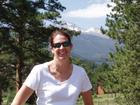
- SWS
- I am... a wife a daughter a sister/sister-in-law an aunt a reader a librarian a doctor a quilter a niece a grandmother ;-) a cat owner 6 feet 1 inches tall a yoga enthusiast a cook