
Sunday, May 24, 2009
Syncing
Just spent a couple of hours cleaning up my Zotero library, upgrading to their version 2.0b4 which (fingers crossed) will eliminate some of the problems I've had lately including being unable to sync and to download citations from EbscoHost and Science Direct. It has taken several days to clean up my tags (if they're more than 255 characters long, zotero won't sync and won't provide a scroll bar in the tags window). I had hoped I could simply browse through the tags window but, alas, I finally had to resort to scrolling through all of my entries, one by one, to view and eliminate long tags. While I was doing this, zotero was syncing. I notice that it will stop syncing and display a tag-too-long message (but only in the mouse-over text) when it comes across a too long tag which was helpful. Zotero is still my citation manager of choice but I would caution anyone with a large library compiled in a version of zotero that precedes 1.5 to clean up their tags before upgrading to 2.0b4! Now, to eliminate duplicates....

Saturday, March 07, 2009
New words
I'm burried in writing my quals this semester and so not very communicative but I came across a couple of new words in my reading today so I thought I'd share them:
de no·vo
Pronunciation: \di-ˈnō-(ˌ)vō, dā-, dē-\
Function: adverb or adjective
Etymology: Latin
Date: 1536
: over again : anew a case tried de novo
As in "Over time, say later this century, we should expect many new kinds of electronic forums to support scientific communication. It is not hard to find de novo creations today, such as pure e-journals or shared disciplinary compendia,
such as ISWORLD (see above) and GDB."
elide
Pronunciation: \i-ˈlīd\
Function: transitive verb
Inflected Form(s): elid·ed; elid·ing
Etymology: Latin elidere to strike out, from e- + laedere to injure by striking
Date: 1796
1 a: to suppress or alter (as a vowel or syllable) by elision b: to strike out (as a written word)2 a: to leave out of consideration : omit b: curtail , abridge
As in "What we have critiqued in this article is the information processing theorizing about electronic publishing and scholarly communication that dominates both popular and academic discourse about the subject—theorizing that elides and homogenizes field differences."
Definitions courtesy of Merriam-Webster Online and quotations from Kling, R., & McKim, G. (2000). Not Just a Matter of Time: Field Differences and the Shaping of Electronic Media in Supporting Scientific Communication. Journal of the American Society for Information Science, 51(14), 1306-1320.
de no·vo
Pronunciation: \di-ˈnō-(ˌ)vō, dā-, dē-\
Function: adverb or adjective
Etymology: Latin
Date: 1536
: over again : anew a case tried de novo
As in "Over time, say later this century, we should expect many new kinds of electronic forums to support scientific communication. It is not hard to find de novo creations today, such as pure e-journals or shared disciplinary compendia,
such as ISWORLD (see above) and GDB."
elide
Pronunciation: \i-ˈlīd\
Function: transitive verb
Inflected Form(s): elid·ed; elid·ing
Etymology: Latin elidere to strike out, from e- + laedere to injure by striking
Date: 1796
1 a: to suppress or alter (as a vowel or syllable) by elision b: to strike out (as a written word)2 a: to leave out of consideration : omit b: curtail , abridge
As in "What we have critiqued in this article is the information processing theorizing about electronic publishing and scholarly communication that dominates both popular and academic discourse about the subject—theorizing that elides and homogenizes field differences."
Definitions courtesy of Merriam-Webster Online and quotations from Kling, R., & McKim, G. (2000). Not Just a Matter of Time: Field Differences and the Shaping of Electronic Media in Supporting Scientific Communication. Journal of the American Society for Information Science, 51(14), 1306-1320.
Monday, February 09, 2009
Word of the day: lacuna
Came across this word in an article this evening and couldn't resist sharing it.
lacuna
One entry found.
Main Entry:
la·cu·na Listen to the pronunciation of lacuna
Pronunciation:
\lə-ˈkü-nə, -ˈkyü-\
Function:
noun
Inflected Form(s):
plural la·cu·nae Listen to the pronunciation of lacunae \-ˈkyü-(ˌ)nē, -ˈkü-ˌnī\ also la·cu·nas Listen to the pronunciation of lacunas \-ˈkü-nəz, -ˈkyü-\
Etymology:
Latin, pool, pit, gap — more at lagoon
Date:
1652
1: a blank space or a missing part : gap ; also : deficiency 1 2: a small cavity, pit, or discontinuity in an anatomical structure
— la·cu·nar Listen to the pronunciation of lacunar \-ˈkü-nər, -ˈkyü-\ also la·cu·nate Listen to the pronunciation of lacunate \lə-ˈkü-nət, -ˈkyü-, -ˌnāt; ˈla-kyə-ˌnāt\ adjective
If you go to MW's site directly and turn your speakers on you can hear it pronounced!
lacuna
One entry found.
Main Entry:
la·cu·na Listen to the pronunciation of lacuna
Pronunciation:
\lə-ˈkü-nə, -ˈkyü-\
Function:
noun
Inflected Form(s):
plural la·cu·nae Listen to the pronunciation of lacunae \-ˈkyü-(ˌ)nē, -ˈkü-ˌnī\ also la·cu·nas Listen to the pronunciation of lacunas \-ˈkü-nəz, -ˈkyü-\
Etymology:
Latin, pool, pit, gap — more at lagoon
Date:
1652
1: a blank space or a missing part : gap
— la·cu·nar Listen to the pronunciation of lacunar \-ˈkü-nər, -ˈkyü-\ also la·cu·nate Listen to the pronunciation of lacunate \lə-ˈkü-nət, -ˈkyü-, -ˌnāt; ˈla-kyə-ˌnāt\ adjective
If you go to MW's site directly and turn your speakers on you can hear it pronounced!
Thursday, January 22, 2009
ALISE day 2
My favorite session from Wednesday was one of a set of three juried papers on social networking in LIS education. Two of the presenters talked about the use of social networking and/or technology in course delivery but the third took another tack. He used network analysis to examine the relationships between students to study the relationships between students in an online LIS class. The data he used were taken from the discussion forums. His specific question was whether name networks or chain networks were more effective for this type of study and he hypothesized that name networks were the better choice because of their use of the message content to look for names of the persons communicating. Name networks still present challenges because students may have the same name, one student can have multiple names. He used both name networks and chain networks to compare the effectiveness and then triangulated using an online survey of the participants. He found statistically significant differences between the two types of networks (using the results of the survey as a baseline, although that data was self-reported): name networks provide roughly 40% more information about social ties in a group as compared to chain networks. Self-reported networks are almost twice as likely to to share the same ties as name networks than chain networks. Name networks method found three important types of social relations: learn – collaborative work – help.
After that session I attended a “birds of a feather” luncheon where I sat at a table of educators whose expertise lay in cataloging including Arlene Taylor! We talked about the relative merits of including specific types of cataloging work (like serials/continuing resources cataloging) in a broad introduction to cataloging versus the inclusion of cataloging in a more narrowly focused course on a specialty like serials/electronic resources librarianship. The consensus was that the former method would reach more students and have a greater effect of introducing students to a variety of specialties that they might not otherwise have the opportunity to be exposed to.
After that session I attended a “birds of a feather” luncheon where I sat at a table of educators whose expertise lay in cataloging including Arlene Taylor! We talked about the relative merits of including specific types of cataloging work (like serials/continuing resources cataloging) in a broad introduction to cataloging versus the inclusion of cataloging in a more narrowly focused course on a specialty like serials/electronic resources librarianship. The consensus was that the former method would reach more students and have a greater effect of introducing students to a variety of specialties that they might not otherwise have the opportunity to be exposed to.
Wednesday, January 21, 2009
ALISE day 1
Attended the 'Works in Progress Poster Session' this evening, it was very well attended and there were TONS of posters to look at. Luckily, ALISE has posted the abstracts on their conference web site and anyone can access them.
Because of my involvement two years in redesigning the MJBL website ago and then evaluating the results, I was particularly interested in a poster presented by a group of doctoral students from the University of Missouri (http://www.alise.org/mc/page.do?sitePageId=80536#58). It described a research project they did on the usability of academic library web sites using heuristic walkthroughs for data collection with the aim of demonstrating the effectiveness of heuristic walkthrough as a method for evaluating usability and developing a set of evaluation criteria (best practices). In their poster they accomplished the first goal but not the second (remember that these are works in progress) so it will be interesting to read their final results.
I also enjoyed talking to Kyungwon Koh from Florida State about her research on the information seeking behaviors of "digital age" young people. In her poster she presented her methodology which is framed by Eliza Dressang's Radical Change Theory. [As an aside, I noticed in Koh's references list that Dressang has just published a new article on her theory in a journal called Contemporary Issues in Technology and Teacher Education (vol.8, no.3).] Koh intends to use RCT to construct indicators of the particular aspects of information behaviors. Her poster abstract is at http://www.alise.org/mc/page.do?sitePageId=80536#24.
I had thought that Becoming colleagues: The experiences of doctoral research fellows in the practice setting would be interesting to me because of my own interest in the different cultures that academics and scholars have to navigate but their focus in this poster was the elimination of boundaries between LIS scholars and LIS practitioners rather than on the characteristics of the boundaries themselves.
I knew that Chris would be interested in one titled Does Size Matter? An Exploration of Job Advertisements for Academic Library Director, 1974-2004. Chris if you read this, the first thing she asked me when I tolder her about your content analysis of library director job ads was, 'is it published'?]
Two TWU faculty had posters as well, Dr. McElrath on Safety Measures Implemented in Academic Libraries in Response to Recent Campus Violence and Dr. Curry on Information-Seeking Behavior of African-American Women with HIV/AIDS. I had a chance to introduce myself to Dr. McElrath which was pleasant.
Because of my involvement two years in redesigning the MJBL website ago and then evaluating the results, I was particularly interested in a poster presented by a group of doctoral students from the University of Missouri (http://www.alise.org/mc/page.do?sitePageId=80536#58). It described a research project they did on the usability of academic library web sites using heuristic walkthroughs for data collection with the aim of demonstrating the effectiveness of heuristic walkthrough as a method for evaluating usability and developing a set of evaluation criteria (best practices). In their poster they accomplished the first goal but not the second (remember that these are works in progress) so it will be interesting to read their final results.
I also enjoyed talking to Kyungwon Koh from Florida State about her research on the information seeking behaviors of "digital age" young people. In her poster she presented her methodology which is framed by Eliza Dressang's Radical Change Theory. [As an aside, I noticed in Koh's references list that Dressang has just published a new article on her theory in a journal called Contemporary Issues in Technology and Teacher Education (vol.8, no.3).] Koh intends to use RCT to construct indicators of the particular aspects of information behaviors. Her poster abstract is at http://www.alise.org/mc/page.do?sitePageId=80536#24.
I had thought that Becoming colleagues: The experiences of doctoral research fellows in the practice setting would be interesting to me because of my own interest in the different cultures that academics and scholars have to navigate but their focus in this poster was the elimination of boundaries between LIS scholars and LIS practitioners rather than on the characteristics of the boundaries themselves.
I knew that Chris would be interested in one titled Does Size Matter? An Exploration of Job Advertisements for Academic Library Director, 1974-2004. Chris if you read this, the first thing she asked me when I tolder her about your content analysis of library director job ads was, 'is it published'?]
Two TWU faculty had posters as well, Dr. McElrath on Safety Measures Implemented in Academic Libraries in Response to Recent Campus Violence and Dr. Curry on Information-Seeking Behavior of African-American Women with HIV/AIDS. I had a chance to introduce myself to Dr. McElrath which was pleasant.
Friday, January 02, 2009
Updated professional web site
I just finished updating my professional web site for the year. I'd like to say that I do it more than once a year (and sometimes I do) but the sad truth is that I often give higher priority to more pressing responsibilities and save up additional news, publications, and updates for the end of the year. You're welcome to have a look; http://staff.tamucc.edu/~ssutton/. If you find any broken links please let me know.
Tuesday, December 30, 2008
Light bulb moment!
Light bulb moment = a moment at which an idea or concept all at once becomes clear or at which a new perspective on an existing idea or concept opens.
In the course of my course work I've taken a couple of research methods courses in the counseling and educational psychology curriculum at TAMU-CC. During one such course my classmates were telling me about how they arrived at their dissertation topics: they look at the 'areas for further research' sections of papers and presentations in their field. I thought this was an interesting idea (and felt a little dense for not having recognized the utility of this sections of a paper before) but really hadn't put it into practice until today as I was browsing around in my bibliographies searching for ideas to propose for my qualifying exam (which consists essentially of the literature review and methodology chapters of a dissertation) and/or dissertation.
In re-reading this section of a couple of the most intriguing papers I read last semester I realized something new about writing up research: for those of us who employ this method of idea selection, it is much better to be as specific as possible about the paths that follow-up research should/could take. For instance, it would be much more helpful to a reader if an author said, "Further research reviewing the impact of instant messaging presence indicators in co-located scientists and multimodal communication among remotely located scientists would provide insight into how instant messaging works in informal scholarly scientific communication" than to say something like someone should examine further the impact of instant messaging on scholarly communication.
Yet another way in which a writing should always consider the audience for whom they're writing.
In the course of my course work I've taken a couple of research methods courses in the counseling and educational psychology curriculum at TAMU-CC. During one such course my classmates were telling me about how they arrived at their dissertation topics: they look at the 'areas for further research' sections of papers and presentations in their field. I thought this was an interesting idea (and felt a little dense for not having recognized the utility of this sections of a paper before) but really hadn't put it into practice until today as I was browsing around in my bibliographies searching for ideas to propose for my qualifying exam (which consists essentially of the literature review and methodology chapters of a dissertation) and/or dissertation.
In re-reading this section of a couple of the most intriguing papers I read last semester I realized something new about writing up research: for those of us who employ this method of idea selection, it is much better to be as specific as possible about the paths that follow-up research should/could take. For instance, it would be much more helpful to a reader if an author said, "Further research reviewing the impact of instant messaging presence indicators in co-located scientists and multimodal communication among remotely located scientists would provide insight into how instant messaging works in informal scholarly scientific communication" than to say something like someone should examine further the impact of instant messaging on scholarly communication.
Yet another way in which a writing should always consider the audience for whom they're writing.
Saturday, October 11, 2008
Zotero
Zotero is an opensource software for citation management. That is, like it's proprietary counterparts, EndNote, ProCite, and RefWorks, Zotero is basically a database in which you can collect citations to articles, books, websites, etc. Once you've developed a collection of citations, you can export them in a bibliography which is automatically formatted in (almost) any citation style you can think of. Also like other citation management software, Zotero has a plug-in for use with MS Word (as well as an opensource word processor called OpenOffice, which I haven't tried yet) that allows you to automatically place citations into a document and develop a bibliography/reference list at the end of the doc).
But Zotero has some really cool features that (in my experience) go beyond it's proprietary counterparts. For instance, you can attach notes to your citations (e.g. notes from reading the article) and you can attach tags to them which allows you to then go back and organize and/or search for all of the citations with a particular tag. You can also create stand-alone notes (e.g. not linked to a citation). You can store a "snapchot" of the item represented by your citation, or store it on your harddrive and link to it from the Zotero record, OR store a full copy in Zotero. And you can link any combination of documents, snapshots, citations, and/or notes. Which gives Zotero some of the function of a qualitative data analysis software.
AND its portable! There's a web-based version in beta test but at the moment I'm using the other method for making Zotero portable: I've got a version of Portable Firefox loaded on a flash drive to which I've downloaded the Zotero plug-in (Zotero is basically a browser plug-in that only works in Firefox). Then I simply copied the citations, notes, etc. that I'd collected in the version of Zotero that's on my laptop hard drive to the flash drive and VOILA! portable citations.
Zotero is a seriously cool product. It's being opensource only adds to the coolness IMHO. It's too bad that the developers are being sued by the EndNote folks! [FMI see http://www.courthousenews.com/2008/09/17/Reuters_Says_George_Mason_University_Is_Handing_Out_Its_Proprietary_Software.htm]
But Zotero has some really cool features that (in my experience) go beyond it's proprietary counterparts. For instance, you can attach notes to your citations (e.g. notes from reading the article) and you can attach tags to them which allows you to then go back and organize and/or search for all of the citations with a particular tag. You can also create stand-alone notes (e.g. not linked to a citation). You can store a "snapchot" of the item represented by your citation, or store it on your harddrive and link to it from the Zotero record, OR store a full copy in Zotero. And you can link any combination of documents, snapshots, citations, and/or notes. Which gives Zotero some of the function of a qualitative data analysis software.
AND its portable! There's a web-based version in beta test but at the moment I'm using the other method for making Zotero portable: I've got a version of Portable Firefox loaded on a flash drive to which I've downloaded the Zotero plug-in (Zotero is basically a browser plug-in that only works in Firefox). Then I simply copied the citations, notes, etc. that I'd collected in the version of Zotero that's on my laptop hard drive to the flash drive and VOILA! portable citations.
Zotero is a seriously cool product. It's being opensource only adds to the coolness IMHO. It's too bad that the developers are being sued by the EndNote folks! [FMI see http://www.courthousenews.com/2008/09/17/Reuters_Says_George_Mason_University_Is_Handing_Out_Its_Proprietary_Software.htm]
Monday, October 06, 2008
The randomness of literature reviews
Is doing a literature review as random for you as it seems to be for me? I'm doing an independent study course this fall that will result in a review of the literature related to informal scholarly communications and the changes that computer mediated communication will/may have. I did a round of searches from scratch and reading based on the results and am now chasing citations from that and conducting some more searches. I had hoped that by this time (six or seven weeks into the semester) that I'd feel more as if I was making some progress but I don't. I'm still finding new leads (and fearing that I've missed others) and reading what I can get my hands on. But here's where the randomness comes in: some of it I just plain can't get hold of, even interlibrary loan doesn't work. And so much of it seems to be 'grey literature', conference presentations, and other ephemeral type stuff. AND it's so interdisciplinary! I just found an article in a biology journal! Sigh. Maybe this is what I need to write up in my results?!
Thursday, October 02, 2008
Research help
I need some help with some research I'm doing this semester. I'm trying to think of all of the possible forms of computer mediated communication there are. Computer mediated communication is exactly what it sounds like, any type of communication that can't occur without the use of a computer-based tool. Some that I've thought of are:
IM
email
blog
wiki
text messaging
doc sharing software (e.g. driveway.com)
combinations (e.g. Google Groups)
chat (text, voip, webcam)
e-books/e-journals
web pages
listserves & discussion boards
social networks like Facebook
Can you think of any I've missed? Do you think that social bookmarking software/sites like delicious count as computer mediated communication?
IM
blog
wiki
text messaging
doc sharing software (e.g. driveway.com)
combinations (e.g. Google Groups)
chat (text, voip, webcam)
e-books/e-journals
web pages
listserves & discussion boards
social networks like Facebook
Can you think of any I've missed? Do you think that social bookmarking software/sites like delicious count as computer mediated communication?
Saturday, September 13, 2008
Is this cool or what?
In re-reading an article for a new project I came across a description of a really cool open source, web 2.0-ish tool that some chemists have developed.
"Using Greasemonkey (4), a Firefox extension that allows anyone to write scripts that can change the way a web page looks, the Blue Obelisk group, a community of chemists who develop open source applications and data-bases in chemistry (5), has created several such scripts to enable chemistry-related features. One of these tools will insert links to blog stories about journal articles into the tables of contents of any ACS, RSC, Wiley, or NPG journal (6). This enhancement to a journal’s table of contents is completely independent of the journal publisher." (Martinsen, D. P. (2007). Scholarly communication 2.0: Evolution or design? ACE Chemical Biology, 2(6), 368-371. doi: 10.1021/cb700111w)
"Using Greasemonkey (4), a Firefox extension that allows anyone to write scripts that can change the way a web page looks, the Blue Obelisk group, a community of chemists who develop open source applications and data-bases in chemistry (5), has created several such scripts to enable chemistry-related features. One of these tools will insert links to blog stories about journal articles into the tables of contents of any ACS, RSC, Wiley, or NPG journal (6). This enhancement to a journal’s table of contents is completely independent of the journal publisher." (Martinsen, D. P. (2007). Scholarly communication 2.0: Evolution or design? ACE Chemical Biology, 2(6), 368-371. doi: 10.1021/cb700111w)
Thursday, September 04, 2008
Holes or the Library Wellness Program
The shelves are finally back in place today and we started to shift them around from alphabetical by title order to call number order. As I was shifting (a fairly mindless pursuit as long and the books you're moving are in order to start with and you pay just a tad of attention to keeping that way) I was reminded of the movie Holes, you know, the one where they spend all day digging holes in the desert and filling them back in? We started the shift by creating "holes" in each range of shelving by consolidating all of the books at one end, Once we're done with that we'll start pulling them off the shelves in call number order starting with the A's (LC classification). BUT in order to make room for the items in call number order, we'll have to keep shifting into the holes we made today.
The next random thought I had was that this was pretty good exercise. We were bending and stretching and lifting and twisting up a storm...what a great workout! Who need's the University's Employee Wellness Program...we've got our own Library Wellness Program. Just put on your jeans and a t-shirt and come find me...I'll put you to work shifting too!
The next random thought I had was that this was pretty good exercise. We were bending and stretching and lifting and twisting up a storm...what a great workout! Who need's the University's Employee Wellness Program...we've got our own Library Wellness Program. Just put on your jeans and a t-shirt and come find me...I'll put you to work shifting too!
Saturday, August 30, 2008
Still moving...
I went in to the library for a couple of hours this afternoon to see if the carpet layers had finished putting down the carpet in the Periodicals section. They had, well almost, the carpet is down but the borders aren't in yet. And they haven't put my shelves back in place. So I finished up the new shelf list that we'll use to re-shelve everything in call number order. I couldn't find a way to make our ILS, III's Millennium, output a list because we use two different location codes (well, actually three if you count newspapers which aren't interfiled with the rest of the periodicals) and it wasn't creating a trustworthy review file (it left out some titles for no apparent reason). So I did it by hand...dumped the holdings into a spreadsheet and sorted it into call number order mostly by hand by comparing it to a search in the patron view. Not very efficient but thorough so now that I'm done I'm fairly certain I've got all the titles included and in the correct order. The finishing touch was to annotate the list by identifying which titles included volumes that are at the bindery. It took about a week of my time, not something I'd care to repeat. I s'pose I should write an article about it so no one else has to repeat it either.
Tuesday, August 26, 2008
Moving ranges of books in libraries
Did you ever wonder how they move entire ranges of books in a library without having to unload all of the books and take the shelves apart? For instance when a library is redecorated and new carpet is installed? It's pretty cool. They have wheeled lifts that actually raise the shelves, stabilze them and make them mobile! We're installing new carpeting in my library and that's exactly what's happening. Here are some photos to give you a better idea...

The orange carpet is old, the blue is new.

The lift has arms that fit through the shelves about midway from bottom to top.

Of course sometimes things don't go as planned.

The orange carpet is old, the blue is new.

The lift has arms that fit through the shelves about midway from bottom to top.

Of course sometimes things don't go as planned.
Friday, August 22, 2008
Crash course in LC classification
My staff and I got a crash course in LC classification of serials recently as we began a project to shift our periodicals collections in print and microform into LC call number order (from alphabetical order by title). We all new enough of LC classification to find materials in other parts of the library, of course, but now we're all much more expert in LC classification for serials! Avoiding duplicates and using Cutters to collocate titles that have undergone a title change were the biggest challenge. Now, of course, comes the real work: actually moving all the volumes into the right order. We'll be at it for weeks!
Friday, July 11, 2008
Well prepared to teach?
There's an interesting article in Inside Higher Ed this morning called "Confidence Gap for New Profs". It's interesting in a number of ways. First because I've been having similar feelings for the past year or so as I approach the completion of my PhD and contemplate a teaching career. I have lots of library experience but little teaching experience that would translate into the classroom for a semester long course. Because I see this as a something that's missing from my graduate school program, I've been working to correct it at least for myself by taking a couple of extra-curricular courses in teaching (particularly online pedagogy) and planning to apply for teaching assistantships during final year of my degree (while I'm working on my dissertation). I realize that this won't be possible in many gradate programs but I think that the responsibility lies not only with the IHE's who are (supposed to be) preparing the next generation of professors but also with the students.
The article goes on to talk about salaries which were another topic of the survey of new faculty upon which the article is based. What I question here is the connection between feeling "well prepared" for a teaching career in higher education and the level of one's salary. Makes me yearn to see the survey questions and the resulting data for myself.
The article goes on to talk about salaries which were another topic of the survey of new faculty upon which the article is based. What I question here is the connection between feeling "well prepared" for a teaching career in higher education and the level of one's salary. Makes me yearn to see the survey questions and the resulting data for myself.
Wednesday, July 09, 2008
ALA Annual: LRRT Research Roundtable...part 2
Lynn Westbrook presented results of some ongoing research into the information needs of victims of domestic violence during this same session on Saturday morning. As usual, her passion for her topic was really overwhelming. I think that is part of what makes her a good qualitative researcher (and reporter of her research). She mentioned that she would put her power point slides from this presentation up on her website but I haven't found them there yet. However, her site does contain a description of her research agenda for this topic as well as some of the products (e.g. reports and articles) that she has published thus far. You can find this at
http://www.ischool.utexas.edu/~lynnwest/cris/cris2products.html
She brought up a concern that had never occurred to me during her presentation: that victims of domestic violence may put themselves at risk by seeking information about their problems, for instance if their abuser discovered that they were seeking information about how to extract themselves from the violent situation learned (for instance by viewing the history of web sites they visited). And yet Westbrook's research uncovered only a very small number of web sites that warned of this possibility (something on the order of 1 or 2%). That's a particularly important point for librarians who might be assisting a victim to find information.
It would also be interesting to think about how Westbrook's model for this type of information seeking might be applied to similar types of information seekers like victims of other types of crimes or an illness.
http://www.ischool.utexas.edu/~lynnwest/cris/cris2products.html
She brought up a concern that had never occurred to me during her presentation: that victims of domestic violence may put themselves at risk by seeking information about their problems, for instance if their abuser discovered that they were seeking information about how to extract themselves from the violent situation learned (for instance by viewing the history of web sites they visited). And yet Westbrook's research uncovered only a very small number of web sites that warned of this possibility (something on the order of 1 or 2%). That's a particularly important point for librarians who might be assisting a victim to find information.
It would also be interesting to think about how Westbrook's model for this type of information seeking might be applied to similar types of information seekers like victims of other types of crimes or an illness.
Tuesday, July 08, 2008
ALA Annual: LRRT Research Roundtable
As usual, LRRT put on an excellent workshop in which three groups presented their research. Lynn Connaway (of OCLC), Marie Radford (of Rutgers), and Timothy Dickey (of OCLC)presented the preliminary results of a large study they are conducting on evaluations of virtual reference. They are focusing on both users and non-users of virtual reference in an academic undergraduate population. Typically (at least in my experience), the non-users exhibit library anxiety and, as a result, were reluctant to approach a librarian through VR services. What I thought was particularly interesting was their use of the term "screenagers" to describe the younger members of the Millennial generation (citing Rushkoff, D. (1996). Playing the future: What we can learn from digital kids. NY: Harper Collins). Also interesting was their finding that screenagers preferred seeking information from a familiar person which suggests to me a preference not only for face to face interaction in order to develop a personal relationship but a preference for interactions with persons with whom they already have an established trusting relationship (e.g. a parent or a friend).
You can find a copy of their proposal for this presentation at http://www.oclc.org/research/projects/synchronicity/resources/lrrt2008-proposal.pdf
[Note: I have yet to find where (if) ALA has posted presenter handouts, etc. from the conference. If anyone out there knows where they are, please drop me a comment!]
You can find a copy of their proposal for this presentation at http://www.oclc.org/research/projects/synchronicity/resources/lrrt2008-proposal.pdf
[Note: I have yet to find where (if) ALA has posted presenter handouts, etc. from the conference. If anyone out there knows where they are, please drop me a comment!]
Friday, June 13, 2008
Next generation library automation (NASIG 2008)
Vision Session I: Next generation library automation – Marshall Breeding
Author of Library Technology Guides: http://www.librarytechnology.org
Includes a db of libraries including the technology they’re using as well as a bibliography of his own work and others’ work (writing) about library technology.
1. Tumoil/upheavals
- industry cosolodation: mergers and acquisitions (companies becoming larger and fewer) which he feels has resulted in a narrowing of choices of products for libraries
- abrupt termination of major library library automation products
- increased control by external financial investors (equity coming from venture capitalists)
- dmise of the traditional opac
- frustration with ils products and vendors
- open source alternatives becoming mainstream
trends (data) taken from a survey of libraries (his) with roughly 7k responses
product technology trends
- innovation below library expectations; “we need the tools in order to deliver out content and services in the best possible way…in order to stay relevant to our users”
- conventional ILS is becoming less capable of doing this
- which has resulted in a proliferation of products related to e-content delivery
web 2.0 / collaborative computing
- ad hoc implementation
- demand requires the ability of users to be collaborative
- 2.0 technologies aren’t being integrated, disjointed;
- Proliferation of silos with no integration orinteroperability with larger library web presents
2. OpenSource
- alternative to traditionally liscensed software
- software doesn’t hold data hostage: does the system have an api so that even if the vendor didn’t provide access to a particular bit of info can you write a script to obtain it from the system?
- open content
- open acces patforms for scholarly content
- IRs
- bibliographic services
- oepnurl / erm knowledge bases
This is a good thing in his opinion.
3. Open source software: an emerging trend in global ils arena
“this is a spike…there’s clearly an explosive interest” drivne by disillusionment with current vendors
- beginning to emerge as a practical option
- total cost of ownership still roughly equal to proprietary commercial model
- two years ago it was a risky enterprise requiring courage on the part of a library (e.g. Georgia state library)
- TNSTAFL: open source software is NOT cost free: time, support, upgrades
- Libraries are looking for another alternative to the traditional ils
-
-
He predicts that traditional licensed products will coexist with open source…it makes the industry more healthy (as would a larger number of vendor systems); it’s good to have both because their coestience will drive improvements in both types of products
- Opensource (ils) options
o Koha
o Evergreen
o Opals
o Interesting to me that all three have commercial support, financial I assume.
- Building a case (in the business sense, e.g. justifying a purchase decision to administration) for open sources ils: compare total cost of ownership, evaluate features and functionality, evaluate technology platform and conceptual models, ask are they truly next-generation systems or open sources versions of legacy models?
- “Making a business case for open source ils” Computers in libraries, March 2008, http://www.librarytechnology.org/tlg-dislpaytext.pl?RC=13134
- Observations on opensource ils:
o Lack serials and acquisitions modules
o Initial wave opensource ils commitments happened in public libraries
o Again, are they really a new model of automation or an open source version of what we already have?
3. implications
4. opportunities emerge out of the upheaval
5. rethinking the ils: a non-integrated library automation system is not sustainable;
List of current open source products: http://www.librarytechnology.org/discovery.pl
Comprehensive resource management
His job is to present us with his vision, our job is to ask (and answer) how is this going to affect my life as a member of the serials community? What would the ideal serials module be like? How would you do it again if you had a chance? Provide input based on the answers to these questions to both the ils vendors and the open source developers…it’s incumbent upon us to participate in the development.
How is this related to globalization of information?
- interoperability increasing & needing to increase (TWIF talks about interoperability being a “flattener”)
- delivery options needed to keep up with user demands for information delivery – how do they WANT to find, obtain, and use information? how are libraries interpreting and responding to these demands?
Breeding presented his expert, informed opinion on the future of the library ils/automation. Some of the trends he sees
Author of Library Technology Guides: http://www.librarytechnology.org
Includes a db of libraries including the technology they’re using as well as a bibliography of his own work and others’ work (writing) about library technology.
1. Tumoil/upheavals
- industry cosolodation: mergers and acquisitions (companies becoming larger and fewer) which he feels has resulted in a narrowing of choices of products for libraries
- abrupt termination of major library library automation products
- increased control by external financial investors (equity coming from venture capitalists)
- dmise of the traditional opac
- frustration with ils products and vendors
- open source alternatives becoming mainstream
trends (data) taken from a survey of libraries (his) with roughly 7k responses
product technology trends
- innovation below library expectations; “we need the tools in order to deliver out content and services in the best possible way…in order to stay relevant to our users”
- conventional ILS is becoming less capable of doing this
- which has resulted in a proliferation of products related to e-content delivery
web 2.0 / collaborative computing
- ad hoc implementation
- demand requires the ability of users to be collaborative
- 2.0 technologies aren’t being integrated, disjointed;
- Proliferation of silos with no integration orinteroperability with larger library web presents
2. OpenSource
- alternative to traditionally liscensed software
- software doesn’t hold data hostage: does the system have an api so that even if the vendor didn’t provide access to a particular bit of info can you write a script to obtain it from the system?
- open content
- open acces patforms for scholarly content
- IRs
- bibliographic services
- oepnurl / erm knowledge bases
This is a good thing in his opinion.
3. Open source software: an emerging trend in global ils arena
“this is a spike…there’s clearly an explosive interest” drivne by disillusionment with current vendors
- beginning to emerge as a practical option
- total cost of ownership still roughly equal to proprietary commercial model
- two years ago it was a risky enterprise requiring courage on the part of a library (e.g. Georgia state library)
- TNSTAFL: open source software is NOT cost free: time, support, upgrades
- Libraries are looking for another alternative to the traditional ils
-
-
He predicts that traditional licensed products will coexist with open source…it makes the industry more healthy (as would a larger number of vendor systems); it’s good to have both because their coestience will drive improvements in both types of products
- Opensource (ils) options
o Koha
o Evergreen
o Opals
o Interesting to me that all three have commercial support, financial I assume.
- Building a case (in the business sense, e.g. justifying a purchase decision to administration) for open sources ils: compare total cost of ownership, evaluate features and functionality, evaluate technology platform and conceptual models, ask are they truly next-generation systems or open sources versions of legacy models?
- “Making a business case for open source ils” Computers in libraries, March 2008, http://www.librarytechnology.org/tlg-dislpaytext.pl?RC=13134
- Observations on opensource ils:
o Lack serials and acquisitions modules
o Initial wave opensource ils commitments happened in public libraries
o Again, are they really a new model of automation or an open source version of what we already have?
3. implications
4. opportunities emerge out of the upheaval
5. rethinking the ils: a non-integrated library automation system is not sustainable;
List of current open source products: http://www.librarytechnology.org/discovery.pl
Comprehensive resource management
His job is to present us with his vision, our job is to ask (and answer) how is this going to affect my life as a member of the serials community? What would the ideal serials module be like? How would you do it again if you had a chance? Provide input based on the answers to these questions to both the ils vendors and the open source developers…it’s incumbent upon us to participate in the development.
How is this related to globalization of information?
- interoperability increasing & needing to increase (TWIF talks about interoperability being a “flattener”)
- delivery options needed to keep up with user demands for information delivery – how do they WANT to find, obtain, and use information? how are libraries interpreting and responding to these demands?
Breeding presented his expert, informed opinion on the future of the library ils/automation. Some of the trends he sees
When did e-books become serials? (NASIG 2008)
When did (E)books become serials?
Rick Lugg presented an overview of the issue including the differences and similarities between e-books and e-journals the gist of which was that the advent of E-journals has brought libraries and their users more content, increased usage, heavy print cancellations, archiving issues, larger share of the materials budget, need to be more selective as a result of recurring costs, more labor intensive.
Similarities between ebooks and ejournals
- both subscription based products
- online (sometimes predetermined) collections
- online “rental”
Differences between ebooks and ejournals
- more individual titles and decisions
- less granuar content and therefore less a&I infrastructure
- owned?
- Platform or maintenance fees
- Strong tradition of expert selection
- Traditional discovery tool is the opac
- Linking and aggregation is less developed
- Different acquisition models
o Platform fees
o Coordination with print
o Online or download
o Selectors and approval plans
o Acquisition on demand
Kim Armstrong (consortium perspective). Libraries have been discussion the same issues surrounding e-books since 1998 including such questions as
- What are the advantages and disadvanatages of ebooks over paper?
- What are the a/d of the current e-book publishing formats?
- What’s the best ebook and reader and should we invest in readers/
- When should we buy and ebook and when should we lease them
By a show of hands in the audience, libraries are still discussing them. Her point is that not a lot of progress has been achieved.
She talked about a deal between CIC (the consortium at which she is employed) with Ingram/Springer for the purchase of the entire Springer e-book output between 2005 and 2010. It provided them with a platform for hosting other publisher’s ebooks they might purchase during this period. Between January and May 2008 their usage showed a “thirst” among patrons for e-books in that their e-book usage was almost 50% of their e-journal usage during the first five months they were available even without the availability of catalog records. It will important to let go of our old models for dealing with books in order to provide our patrons with the e-books they thirst for.
Bob Nardini (e-book aggregator). “Books are back and we need to figure them out a second time.” Pointed out the need for interoperability between publishers, aggregators, and vendors in order to control e-books. Also pointed out the similarity between articles and books that was recently highlighted by the Harvard A&S faculty’s decision to archive their own works in an open repository where they are associated more with their author and the institution than with a group of other articles under the title, vol and issue of a journal.
Peter McCracken (e-journal management system vendor) focused his discussion on the management of e-books and e-journals. Similarities: delivery mechanism and licensing. Differences: e-books are not continually expanding and don’t compare with e-journals in terms of size. Conventional expectations include a need for more accurate information more quickly, bib records for e-books are far more descriptive than for serials and therefore more important for for e-journals, and greater expectations.
E-book management challenges
- title selection: too many records for libraries to manage by hand
- need a better way of transferring metadata from publisher to library thus all parties involved have to work together (more interoperability)
- proceedings: give libraries the opportunity to treat e-proceedings as either monographs or serials
- edition question: which ISSN or ISBN to use?
- different editions are the same, different formats (translations, film, Kindle, audio book, etc) are different which points out the ISBN question
He’s an engaging speaker because he’s so enthusiastic in a geeky sort of way!
Is what he’s really saying that we need a better system for identifying differences between e-books in an electronic environment? Perhaps a la Mike K’s “information shadows” from this morning?
One of the other things he’s saying is that often the relevance of the need for identifying different editions or formats is in the “eye of the beholder”…sometimes you may want to read Huck Finn and any edition will do but on the other hand sometimes you may want to ‘read’ a French translation via audio. That’s a really interesting point in the face of the arguments we’ve had in my library lately about multiple records for a single work ‘confusing’ the patron who just wants to read Huck Finn. Adolpho T. makes a good point that FRBR resolves this.
Great food for thought here: how could we treat e-books more like e-journals and would doing so be useful for our patrons and if it is more useful for them how will we know?
Rick Lugg presented an overview of the issue including the differences and similarities between e-books and e-journals the gist of which was that the advent of E-journals has brought libraries and their users more content, increased usage, heavy print cancellations, archiving issues, larger share of the materials budget, need to be more selective as a result of recurring costs, more labor intensive.
Similarities between ebooks and ejournals
- both subscription based products
- online (sometimes predetermined) collections
- online “rental”
Differences between ebooks and ejournals
- more individual titles and decisions
- less granuar content and therefore less a&I infrastructure
- owned?
- Platform or maintenance fees
- Strong tradition of expert selection
- Traditional discovery tool is the opac
- Linking and aggregation is less developed
- Different acquisition models
o Platform fees
o Coordination with print
o Online or download
o Selectors and approval plans
o Acquisition on demand
Kim Armstrong (consortium perspective). Libraries have been discussion the same issues surrounding e-books since 1998 including such questions as
- What are the advantages and disadvanatages of ebooks over paper?
- What are the a/d of the current e-book publishing formats?
- What’s the best ebook and reader and should we invest in readers/
- When should we buy and ebook and when should we lease them
By a show of hands in the audience, libraries are still discussing them. Her point is that not a lot of progress has been achieved.
She talked about a deal between CIC (the consortium at which she is employed) with Ingram/Springer for the purchase of the entire Springer e-book output between 2005 and 2010. It provided them with a platform for hosting other publisher’s ebooks they might purchase during this period. Between January and May 2008 their usage showed a “thirst” among patrons for e-books in that their e-book usage was almost 50% of their e-journal usage during the first five months they were available even without the availability of catalog records. It will important to let go of our old models for dealing with books in order to provide our patrons with the e-books they thirst for.
Bob Nardini (e-book aggregator). “Books are back and we need to figure them out a second time.” Pointed out the need for interoperability between publishers, aggregators, and vendors in order to control e-books. Also pointed out the similarity between articles and books that was recently highlighted by the Harvard A&S faculty’s decision to archive their own works in an open repository where they are associated more with their author and the institution than with a group of other articles under the title, vol and issue of a journal.
Peter McCracken (e-journal management system vendor) focused his discussion on the management of e-books and e-journals. Similarities: delivery mechanism and licensing. Differences: e-books are not continually expanding and don’t compare with e-journals in terms of size. Conventional expectations include a need for more accurate information more quickly, bib records for e-books are far more descriptive than for serials and therefore more important for for e-journals, and greater expectations.
E-book management challenges
- title selection: too many records for libraries to manage by hand
- need a better way of transferring metadata from publisher to library thus all parties involved have to work together (more interoperability)
- proceedings: give libraries the opportunity to treat e-proceedings as either monographs or serials
- edition question: which ISSN or ISBN to use?
- different editions are the same, different formats (translations, film, Kindle, audio book, etc) are different which points out the ISBN question
He’s an engaging speaker because he’s so enthusiastic in a geeky sort of way!
Is what he’s really saying that we need a better system for identifying differences between e-books in an electronic environment? Perhaps a la Mike K’s “information shadows” from this morning?
One of the other things he’s saying is that often the relevance of the need for identifying different editions or formats is in the “eye of the beholder”…sometimes you may want to read Huck Finn and any edition will do but on the other hand sometimes you may want to ‘read’ a French translation via audio. That’s a really interesting point in the face of the arguments we’ve had in my library lately about multiple records for a single work ‘confusing’ the patron who just wants to read Huck Finn. Adolpho T. makes a good point that FRBR resolves this.
Great food for thought here: how could we treat e-books more like e-journals and would doing so be useful for our patrons and if it is more useful for them how will we know?
Subscribe to:
Posts (Atom)
About Me
- SWS
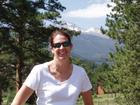
- I am... a wife a daughter a sister/sister-in-law an aunt a reader a librarian a doctor a quilter a niece a grandmother ;-) a cat owner 6 feet 1 inches tall a yoga enthusiast a cook