
Friday, February 29, 2008

Thursday, February 21, 2008
An article about me!
The profiles editor of the NASIG Newsletter asked me if she could do a profile of me this spring and I've been corresponding with her recently in support of her article. The article came out today and I thought you all would enjoy reading it. Find it at http://nasignews.wordpress.com/2008/02/20/231-200803-profiles-sarah-sutton/.
In the same issue is a profile of the NASIG committee that I chaired last year and have been a member of since 2004, the Awards & Recognition Committee. Find it at http://nasignews.wordpress.com/2008/02/20/231-200803-profiles-awards-recognition/.
P.S. NASIG stands for North American Serials Interest Group. They are a professional organization made up of librarians, publishers, vendors, and others with an interest or stake in the serials information chain.
In the same issue is a profile of the NASIG committee that I chaired last year and have been a member of since 2004, the Awards & Recognition Committee. Find it at http://nasignews.wordpress.com/2008/02/20/231-200803-profiles-awards-recognition/.
P.S. NASIG stands for North American Serials Interest Group. They are a professional organization made up of librarians, publishers, vendors, and others with an interest or stake in the serials information chain.
Wednesday, February 20, 2008
New Professional web site
I'm very excited to announce that I've created a new professional web site. You can see it at http://falcon.tamucc.edu/~ssutton/index.html. Have a look and tell me what you think!
Friday, February 01, 2008
Communication
You may have noticed that I added a Meebo IM tool to NSL recently. I'd been talking to a faculty friend of mine about the expectations of students, specifically that they expect their instructors to be available to them 24/7. My friend was bemoaning the lack of "downtime" this creates. Which got me to thinking about the potential for holding "office hours" via IM. Many libraries do reference via IM (there's been a discussion recently on the LIBREF listserv about the advantages and disadvanteges of Meebo) but I haven't heard or read much about using IM for office hours. Has anyone out there? I like Meebo because it doesn't require me to download any software and because it "talks" to a variety of IM services like AIM, Yahoo!, ICQ, and Google. Anyhow, I thought I'd give it a try.
Sunday, January 27, 2008
Research agendas in library science
One of my class assignments this semester is to conduct a small research project in an area of interest to me within LS that informs an issue. Having just finished writing an article for the forthcoming Encyclopedia of Library and Information Science on serials collection and management, I've been thinking about the importance of serials to librarians, particularly academic librarians, and how little I learned about them in my master's in librarianship program. My experience in NASIG leads me to believe that this is the case in general and I wonder why. So the issue I've tentatively settled on for the assignment is whether or not MLS programs should put more curricular emphasis on serials.
After discovering more about research agendas last week, I started to look for research agendas in LS, especially among professional organizations and grant funding agencies with a focus on serials. I looked at NASIG, ALCTS-CRS, UKSG, ALISE, OCLC, and IMLS. What I discovered is that most of them lack explicit research agendas but have missions, goals, areas of study, and/or themes in which a research agenda is implied. Some are more research oriented and some are more praxis oriented. For instance, it's evident from their web pages and their conference programs that both NASIG and UKSG are much more focused on the practitioners' side of librarianship.
ALISE and ALCTS-CRS also have implicit research agendas (as far as I tell, there is one place on ALISE's web site that mentions a research agenda but I couldn't find the agenda itself). Both organizations are clearly interested in and supportive of LIS research although the types of research differ between them. ALCTS-CRS's agenda is evident in it's committees and their charges. Their themes include education, research and publication, serials standards. ALISE's agenda is more related to education (for obvious reasons) and includes scholarship and research as well as pedagogy and curricula. Of these four organizations, ALISE is the only one that makes grants to fund research.
Both ALISE and OCLC give research grants (in fact, they give one together the results of which are presented at ALISE's annual conference) as does IMLS. In fact, based on my experience at ALISE's annual conference a couple of weeks ago, IMLS is one of the biggest grant funding agencies for librarianship. So it is interesting that they also do not have an explicit research agenda but instead have "goals":
After discovering more about research agendas last week, I started to look for research agendas in LS, especially among professional organizations and grant funding agencies with a focus on serials. I looked at NASIG, ALCTS-CRS, UKSG, ALISE, OCLC, and IMLS. What I discovered is that most of them lack explicit research agendas but have missions, goals, areas of study, and/or themes in which a research agenda is implied. Some are more research oriented and some are more praxis oriented. For instance, it's evident from their web pages and their conference programs that both NASIG and UKSG are much more focused on the practitioners' side of librarianship.
ALISE and ALCTS-CRS also have implicit research agendas (as far as I tell, there is one place on ALISE's web site that mentions a research agenda but I couldn't find the agenda itself). Both organizations are clearly interested in and supportive of LIS research although the types of research differ between them. ALCTS-CRS's agenda is evident in it's committees and their charges. Their themes include education, research and publication, serials standards. ALISE's agenda is more related to education (for obvious reasons) and includes scholarship and research as well as pedagogy and curricula. Of these four organizations, ALISE is the only one that makes grants to fund research.
Both ALISE and OCLC give research grants (in fact, they give one together the results of which are presented at ALISE's annual conference) as does IMLS. In fact, based on my experience at ALISE's annual conference a couple of weeks ago, IMLS is one of the biggest grant funding agencies for librarianship. So it is interesting that they also do not have an explicit research agenda but instead have "goals":
- To promote improvements in library services in all types of libraries in order to better serve the people of the United States.
- To facilitate access to resources and in all types of libraries for the purpose of cultivating an educated and informed citizenry; and
- To encourage resource sharing among all types of libraries for the purpose of achieving economical and efficient delivery of library services to the public. (still from the "about" page linked above).
Thursday, January 24, 2008
Thinking about research agendas
The syllabus for my Research & Issues course this semester says that for
"Saturday, Feb. 2. Each seminar participant should be prepared to report briefly on the research agenda of the professional associations and major grant agencies related to her area of interest. Each participant will bring multiple copies of a one-page statement of her own research agenda."
questions
1. what IS a research agenda?
2. can a professional association HAVE a research agenda?
3. the syllabus says of the course "format (oncampus, distance, conference)
Hybrid in Concept (individualized research but in a common frame and communicated to all
specialists under the umbrella of LS)" does that mean that we will all frame our research using Friedson's model?
The first thing we did in class was to differentiate between a problem and an issue (the focus of this class) so I'm thinking that the place to start is by providing support for my claim that my issue is an issue using the definition we've adopted. In class, we talked about:
How does one know when there are issues? When people disagree about what should be done.
What are some signs of disagreement? Conflict, obviously; Policy Statements, by implication.
What are the sources of the issues relating to the doctoral program?
So, what kinds of research inform a resolution of the issue?
Once the research is done, how will the issue be resolved?
Once the issue is resolved, how will the resolution be implemented? New problems, new issues.
The issue I'm interested in addressing [researching?, resolving?] has to do with teaching more about serials and electronic resources in library school.
Sample research agendas:
http://en.wikipedia.org/wiki/Philippine_Institute_for_Development_Studies#Research_Agenda (this one is a paragraph or two)
http://www.historic-scotland.gov.uk/orkney_research_agenda_-_prelims.pdf (this one is 19 pages long, both include "themes", the longer one also contains sections that give the background and context, assessments of resources, techniques, and strategies)
http://www.ewea.org/fileadmin/ewea_documents/documents/publications/reports/SRA_final.pdf (this one is 60 pages long!!! and is structured similarly to the first two)
http://en.wikipedia.org/wiki/Margaret_Hedstrom (here's one about a woman in LS who has created a research agenda for digital preservation)
Another one I found broke the research project down into phases.
From http://en.wikipedia.org/wiki/Canadian_Institutes_of_Health_Research, "CIHR consists of 13 "virtual" institutes, each headed by a Scientific Director and assisted by an Institute Advisory Board. They work together to shape a national health research agenda for Canada. The institutes bring together researchers, health professionals and policy-makers from voluntary health organizations, provincial government agencies, international research organizations and industry and patient groups from across the country with a shared interest in improving the health of Canadians." (makes it sound like a system for prioritizing a group of research projects)
http://www.springerlink.com/content/25710p8p87273216/ "The Special Libraries Association (SLA), an international professional association that represents 14,000 information resource experts, is a key influence in defining and meeting the research priorities of the special library community. In June 1986, SLA's Board of Directors formed the Special Committee on Research with the charge of determining if a research program was a necessity for SLA, and, if so, to establish a'comprehensive research strategy, in particular focusing on issues especially relevant to special librarianship and information management. In June 1988, The Board of Directors voted to establish an in-house research department and a standing Research Committee, which formulated a research agenda subsequently approved by the Board in June 1989. SLA's research agenda sets forth priorities and serves as the keystone to all research conducted by and for the Association. In June 1990, the SLA Board of Directors reaffirmed the Association's commitment to research by approving the Strategic Planning Committee's recommendation that research be one of the top priorities for the next five years. This article reviews SLA's research agenda, current research activities and future priorities, and comments on the importance of research to the special library community."
http://www.springerlink.com/content/d648126577w65123/ Abstract The author proposes a research agenda for libraries focusing on ten problem areas: rising costs, shrinking funding, electronic provision of services, deterioration of materials, use of document delivery services, changes in copyright and licensing, out-sourcing, staff training, organizational challenges, and redefining the library’s role.
ACRL Research Agenda for Library Instruction and Information Literacy: http://www.ala.org/ala/acrlbucket/is/iscommittees/webpages/research/researchagendalibrary.cfm
SLA's research agenda: http://www.springerlink.com/content/25710p8p87273216/
So I've got a better idea of what a research agenda is and I can see that it IS possible for a professional association to have or support a particluar research agenda. It seems to me that the pertinent associations for my issue are:
1. NASIG
2. ALISE
3. ALCTS
4. ?
...and, of course, the next question is which "major grant agencies" might be supportive of research on this issue?
"Saturday, Feb. 2. Each seminar participant should be prepared to report briefly on the research agenda of the professional associations and major grant agencies related to her area of interest. Each participant will bring multiple copies of a one-page statement of her own research agenda."
questions
1. what IS a research agenda?
2. can a professional association HAVE a research agenda?
3. the syllabus says of the course "format (oncampus, distance, conference)
Hybrid in Concept (individualized research but in a common frame and communicated to all
specialists under the umbrella of LS)" does that mean that we will all frame our research using Friedson's model?
The first thing we did in class was to differentiate between a problem and an issue (the focus of this class) so I'm thinking that the place to start is by providing support for my claim that my issue is an issue using the definition we've adopted. In class, we talked about:
How does one know when there are issues? When people disagree about what should be done.
What are some signs of disagreement? Conflict, obviously; Policy Statements, by implication.
What are the sources of the issues relating to the doctoral program?
So, what kinds of research inform a resolution of the issue?
Once the research is done, how will the issue be resolved?
Once the issue is resolved, how will the resolution be implemented? New problems, new issues.
The issue I'm interested in addressing [researching?, resolving?] has to do with teaching more about serials and electronic resources in library school.
Sample research agendas:
http://en.wikipedia.org/wiki/Philippine_Institute_for_Development_Studies#Research_Agenda (this one is a paragraph or two)
http://www.historic-scotland.gov.uk/orkney_research_agenda_-_prelims.pdf (this one is 19 pages long, both include "themes", the longer one also contains sections that give the background and context, assessments of resources, techniques, and strategies)
http://www.ewea.org/fileadmin/ewea_documents/documents/publications/reports/SRA_final.pdf (this one is 60 pages long!!! and is structured similarly to the first two)
http://en.wikipedia.org/wiki/Margaret_Hedstrom (here's one about a woman in LS who has created a research agenda for digital preservation)
Another one I found broke the research project down into phases.
From http://en.wikipedia.org/wiki/Canadian_Institutes_of_Health_Research, "CIHR consists of 13 "virtual" institutes, each headed by a Scientific Director and assisted by an Institute Advisory Board. They work together to shape a national health research agenda for Canada. The institutes bring together researchers, health professionals and policy-makers from voluntary health organizations, provincial government agencies, international research organizations and industry and patient groups from across the country with a shared interest in improving the health of Canadians." (makes it sound like a system for prioritizing a group of research projects)
http://www.springerlink.com/content/25710p8p87273216/ "The Special Libraries Association (SLA), an international professional association that represents 14,000 information resource experts, is a key influence in defining and meeting the research priorities of the special library community. In June 1986, SLA's Board of Directors formed the Special Committee on Research with the charge of determining if a research program was a necessity for SLA, and, if so, to establish a'comprehensive research strategy, in particular focusing on issues especially relevant to special librarianship and information management. In June 1988, The Board of Directors voted to establish an in-house research department and a standing Research Committee, which formulated a research agenda subsequently approved by the Board in June 1989. SLA's research agenda sets forth priorities and serves as the keystone to all research conducted by and for the Association. In June 1990, the SLA Board of Directors reaffirmed the Association's commitment to research by approving the Strategic Planning Committee's recommendation that research be one of the top priorities for the next five years. This article reviews SLA's research agenda, current research activities and future priorities, and comments on the importance of research to the special library community."
http://www.springerlink.com/content/d648126577w65123/ Abstract The author proposes a research agenda for libraries focusing on ten problem areas: rising costs, shrinking funding, electronic provision of services, deterioration of materials, use of document delivery services, changes in copyright and licensing, out-sourcing, staff training, organizational challenges, and redefining the library’s role.
ACRL Research Agenda for Library Instruction and Information Literacy: http://www.ala.org/ala/acrlbucket/is/iscommittees/webpages/research/researchagendalibrary.cfm
SLA's research agenda: http://www.springerlink.com/content/25710p8p87273216/
So I've got a better idea of what a research agenda is and I can see that it IS possible for a professional association to have or support a particluar research agenda. It seems to me that the pertinent associations for my issue are:
1. NASIG
2. ALISE
3. ALCTS
4. ?
...and, of course, the next question is which "major grant agencies" might be supportive of research on this issue?
Saturday, January 19, 2008
NASIG Board Member at Large - not this year
It was with some trepidation last fall that I accepted a nomination to run for member-at-large to the NASIG Executive Board again this year. I was nominated, ran, and lost the election last year. I lost to a couple of friends who I knew would do a good job so I was only a little disappointed. This year I was nominated again and was feeling a little more confident about it. But Thursday I received an email to tell me that of the 65 (!) nominations for member-at-large I had not been selected to run. And once again, I find myself a little disappointed but also a little relieved. It took a few days to shake the feeling that I now had a gap in my time for the next two years that needed to be filled immediately and embrace the feeling of relief; now I can concentrate on finishing my doctoral class work and have time at work to accomplish some of the goals my department set at the beginning of the fiscal year. And besides, if by chance the University (TAMUCC) accepts my proposal to adopt information literacy as our quality enhancement plan (QEP), I"m sure I'll be kept plenty busy!
Tuesday, January 15, 2008
ALISE side effects
I returned home last night and arrived at work this morning in time to attend the beginning of semester faculty meeting (which librarians are 'strongly encouraged' to attend, even though we are not technically faculty) and an interesting thing happened: I felt like one of them! I always have to some extent (although there are always going to be some snobs) but this I really have to credit to spending four days at the ALISE conference visiting and getting to know library school faculty and other doctoral students. I was made to feel (at ALISE) very welcome and was treated like a peer (which I had hoped for based on my other small conference experiences but didn't quite dare expect based on some of my experiences with faculty at TAMUCC). I think that institutional and intradiscipline culture sometimes creates local norms for faculty - doctoral student interactions AND faculty - librarian interactions. There's something interesting to study!
Thursday, January 10, 2008
PAR, Future LIS Faculty, and, of course, Information Seeking
More good sessions today at the ALISE conference. This morning's guest speaker was Jean Schensul from The Institute for Community Research. She described some of the methods she and the staff at ICR use to conduct what she calls community based research but which is essentially participatory action research. Not surprising that she was the second key note speaker since the theme of the conference is fairly PAR oriented and no disrespect but PAR or CBR just isn't my thing. It's interesting from a methodological standpoint but just not really up my alley. 'Nuf said.
By far the best session I attended today was about recruiting and training the next generation of library and information school faculty (there's an emphasis here that there is a difference between the two). The first part of the presentation was a report on a program called Project Athena which is an IMLS funded project designed to identify, recruit, and prepare LIS faculty. The second part was a report on a program with a similar vision but no grant funding.
Project Athena is well staffed and funded and focuses on preparing teaching faculty by partnering with LIS programs at other institutions and giving their fellows the opportunity to teach. Results of research conducted on the program include recommendations that existing networks and campus resources as well as cross institutional collaboration be used to increase the pool of potential LIS faculty, that new networks and role models/mentors be used to increase the diversity of the pool, and that doctoral students whose intention it is to teach be better prepared to navigate the organizational culture of various institutions, balance teaching and service commitments, and disseminate their research post-dissertation.
Elizabeth Figa at the University of North Texas School of Library and Information Science has implemented a mentoring program for doctoral students in their interdisciplinary doctoral program that is unfunded (at least formally, she solicits funding as needed for particular students from her dean and provides some of it herself) and seems a bit less structured and more information than Project Athena but certainly no less ambitious.
I find it interesting that none of the four "example" graduate students from these programs who spoke about their experiences in the programs had backgrounds in academic librarianship so I asked about it during the q&a session at the end of the program. The UNT SLIS program was (and remains as far as I can tell) focused purposefully on students with backgrounds in public libraries and as school library media specialists as does Project Athena since neither school's masters level programs are focused on academic librarianship (and so, presumably, they are directing their recruiting efforts predominantly at students graduating from their programs).
Personally, I think that it may also have to do with the fact that many academic librarians have experience with promotion and tenure and the academic culture having already had to learn to navigate it as librarians.
I did find very interesting comments by both speakers about the "graying of the profession" leading not only to the need to recruit librarians but also to recruit library school faculty. One of them went so far as to point out that there are currently more faculty positions than PhDs to fill them.
By far the best session I attended today was about recruiting and training the next generation of library and information school faculty (there's an emphasis here that there is a difference between the two). The first part of the presentation was a report on a program called Project Athena which is an IMLS funded project designed to identify, recruit, and prepare LIS faculty. The second part was a report on a program with a similar vision but no grant funding.
Project Athena is well staffed and funded and focuses on preparing teaching faculty by partnering with LIS programs at other institutions and giving their fellows the opportunity to teach. Results of research conducted on the program include recommendations that existing networks and campus resources as well as cross institutional collaboration be used to increase the pool of potential LIS faculty, that new networks and role models/mentors be used to increase the diversity of the pool, and that doctoral students whose intention it is to teach be better prepared to navigate the organizational culture of various institutions, balance teaching and service commitments, and disseminate their research post-dissertation.
Elizabeth Figa at the University of North Texas School of Library and Information Science has implemented a mentoring program for doctoral students in their interdisciplinary doctoral program that is unfunded (at least formally, she solicits funding as needed for particular students from her dean and provides some of it herself) and seems a bit less structured and more information than Project Athena but certainly no less ambitious.
I find it interesting that none of the four "example" graduate students from these programs who spoke about their experiences in the programs had backgrounds in academic librarianship so I asked about it during the q&a session at the end of the program. The UNT SLIS program was (and remains as far as I can tell) focused purposefully on students with backgrounds in public libraries and as school library media specialists as does Project Athena since neither school's masters level programs are focused on academic librarianship (and so, presumably, they are directing their recruiting efforts predominantly at students graduating from their programs).
Personally, I think that it may also have to do with the fact that many academic librarians have experience with promotion and tenure and the academic culture having already had to learn to navigate it as librarians.
I did find very interesting comments by both speakers about the "graying of the profession" leading not only to the need to recruit librarians but also to recruit library school faculty. One of them went so far as to point out that there are currently more faculty positions than PhDs to fill them.
Wednesday, January 09, 2008
ALISE conference 2008
This is a nice conference. I met lots of graduate students at the "works in progress" poster session last night.
And this morning I heard Yvonna Lincoln speak! I heard afterward that some were disappointed with her keynote address because they were looking forward to hearing her speak about research methods when what she really spoke about was "serving democratic needs for information & literacy". She talked about how libraries, specifically academic libraries could help to reduce the digital divide (a term she prefers to "haves and have nots") using their physical, digital, human and social resources. It was all based on a quote from Benjamin Franklin to the affect that the benefit of democracy is that power lies with the people and if the people lack the "enlightenment" to use their power responsibly the thing to do is educate them, not to take the power away from them.
I confess that I would have liked to hear her speak about research methods too but I got some really great ideas from her address for the TAMUCC Information LIteracy QEP proposal that I just wrote so I wasn't disappointed. The first idea is to involve students in service learning projects (possibly as a component of a class) that would take them out into the community to teach what they learn (information literacy). And the second was having librarians hold "office hours" in the academic departments to which they are liaisons.
She talked a little bit about assessment and outcomes, saying basically that the idea was to go out and ask people 'how has your life changed as a result of X' which seems really simple but is something that I'm not sure is heavily emphasized in the ARL information literacy standards.
I had lunch today with the Research Methods SIG which ended up being about seven people talking about teaching research methods courses in LS programs at the masters level. Very interesting. And this afternoon I've been listening to various people (doctoral students and faculty) talking about their research. In that respect, at least, it's been lots of fun.
Over all, everyone has been welcoming and pleasant. I was a little worried that it wouldn't compare well to the other small conference I always go to in the summer where everyone is particularly warm and welcoming. But I'm happy to say that everyone here has been nothing but warm and welcoming. I have ribbons on my name tag that identify me as both a student and a first time conference attendee and lots of people have stopped me to introduce themselves and to ask me about myself so I feel right at home.
I also feel right at home because all of these people are interested in the same types of things that I'm interested in: research in library science. I've already attended several workshops, meetings for people with like interests, and poster sessions. I've heard about historical research methods in library science (interestingly, women were the first librarians to conduct surveys of library users, not men even though men originally dominated the profession).
I also attended a session given by Bill Moen and Sherry Vellucci describing MERIC which stands for Metadata Education & Research Information Commons. Its a repository for and community for sharing ideas about course related materials (lecture notes, powerpoint slides, tests and quizes, etc.) for teaching cataloging and metadata courses. This is a very cool idea. What you'll find at their website is a prototype.
This afternoon I attended what amounted to a research showcase. Three presenters gave an overview of research in progress. Kate McDowel presented on "The Unspoken Influence of Women and Children's Services in Professional Librarianship 1882-1906" and for historical research it was very interesting. She credits women librarians with introducing survey research into library and information science as a way for female librarians to support and express their own opinions in a male dominated (at the time) profession.
Suellen Adams presented research that she and Mary Lynn Rice-Lively are conducting into the relationship between personality and LIS researchers' choice of methodology. In interviews, they've discovered that research questions tend to be socially or politically relevant, that researchers like to merge their various interests into one topic, and that, when asked to describe their research, subjects were far more focused on their research topics than on their research methods. The next step in this project is to look for correlations between research methods and the researchers' personality (via the Myers-Briggs Type Indicator protocol).
Finally, Heather Hill presented her investigation into the collection of a privately managed public library system. Also not even remotely something that I'd normally find an interest in but, again, presented so well that I found it fascinating (in that perfect world where I don't need to sleep this would be something I'd choose to read about).
If anything in this (far too long) post has captured your interest, you can find abstracts and contact information for the researchers at the ALISE web site at http://www.alise.org/mc/page.do?sitePageId=58439.
I also feel right at home because all of these people are interested in the same types of things that I'm interested in: research in library science. I've already attended several workshops, meetings for people with like interests, and poster sessions. I've heard about historical research methods in library science (interestingly, women were the first librarians to conduct surveys of library users, not men even though men originally dominated the profession).
I also attended a session given by Bill Moen and Sherry Vellucci describing MERIC which stands for Metadata Education & Research Information Commons. Its a repository for and community for sharing ideas about course related materials (lecture notes, powerpoint slides, tests and quizes, etc.) for teaching cataloging and metadata courses. This is a very cool idea. What you'll find at their website is a prototype.
This afternoon I attended what amounted to a research showcase. Three presenters gave an overview of research in progress. Kate McDowel presented on "The Unspoken Influence of Women and Children's Services in Professional Librarianship 1882-1906" and for historical research it was very interesting. She credits women librarians with introducing survey research into library and information science as a way for female librarians to support and express their own opinions in a male dominated (at the time) profession.
Suellen Adams presented research that she and Mary Lynn Rice-Lively are conducting into the relationship between personality and LIS researchers' choice of methodology. In interviews, they've discovered that research questions tend to be socially or politically relevant, that researchers like to merge their various interests into one topic, and that, when asked to describe their research, subjects were far more focused on their research topics than on their research methods. The next step in this project is to look for correlations between research methods and the researchers' personality (via the Myers-Briggs Type Indicator protocol).
Finally, Heather Hill presented her investigation into the collection of a privately managed public library system. Also not even remotely something that I'd normally find an interest in but, again, presented so well that I found it fascinating (in that perfect world where I don't need to sleep this would be something I'd choose to read about).
If anything in this (far too long) post has captured your interest, you can find abstracts and contact information for the researchers at the ALISE web site at http://www.alise.org/mc/page.do?sitePageId=58439.
Wednesday, December 12, 2007
Online courses for everyone!
This is so cool I thought it had to be shared on both my blogs. I've long been a fan of open online course ware and have always wanted time to try taking a whole course. I read an article at Inside HIgher Ed this morning about Yale's open course ware offerings. They include videos of lectures in addition to syllabi, tests, notes, and PowerPoints. The courses at Yale's site include introductory courses in physics, psychology, and poetry. I've been collecting links to open course ware sites including MIT's and Rice University's in my del.icio.us site if you want to have a look at some of the other offerings.
Sunday, November 25, 2007
New words
I was reading an article this afternoon and came across several words with which I was unfamiliar so (of course) I looked them up. They're pretty fun words so I thought I'd share them. I must admit I'm not sure when one would ever use them, the author whose article I was reading could easily have used more familiar words and I confess that I mentally accused him of using $10 words just to make himself sound more intelligent (or something). Here they are (with help from Webster's):
perspicuous
Main Entry:
per·spic·u·ous Listen to the pronunciation of perspicuous
Pronunciation:
\pər-ˈspi-kyə-wəs\
Function:
adjective
Etymology:
Latin perspicuus transparent, perspicuous, from perspicere
Date:
1586
: plain to the understanding especially because of clarity and precision of presentation
opprobrium
perspicuous
Main Entry:
per·spic·u·ous Listen to the pronunciation of perspicuous
Pronunciation:
\pər-ˈspi-kyə-wəs\
Function:
adjective
Etymology:
Latin perspicuus transparent, perspicuous, from perspicere
Date:
1586
: plain to the understanding especially because of clarity and precision of presentation
opprobrium
- Main Entry:
- op·pro·bri·um
- Pronunciation:
- \-brē-əm\
- Function:
- noun
- Etymology:
- Latin, from opprobrare to reproach, from ob in the way of + probrum reproach; akin to Latin pro forward and to Latin ferre to carry, bring — more at ob-, for, bear
- Date:
- 1656

1: something that brings disgrace2 a: public disgrace or ill fame that follows from conduct considered grossly wrong or vicious b: contempt, reproach
defeasance
defeasance
- Main Entry:
- de·fea·sance
- Pronunciation:
- \di-ˈfē-zən(t)s\
- Function:
- noun
- Etymology:
- Middle English defesance, from Anglo-French, from defesaunt, present participle of defaire
- Date:
- 15th century
NVivo7 Test Drive Report #5
This is a short one. It just occurred to me that one of the big assumptions that NVivo makes is that all of your documents will be digital. But that might not be the case especially with historical research (diaries, photos, etc.). I wonder how they account for non-digital data? Must explore.
Friday, November 23, 2007
NVivo7 Test Drive Report #4
Preliminary conclusions.
I've been writing these first entries as an class assignment and while I have 26 more days in my trial of the software and plan to continue using it to analyze my usability data and report my experiences here (after I finish my other class assignments), I did have to complete and turn in the assignment I was originally writing for. This is the conclusion that I wrote for that assignment.
Several very useful points became clear as I worked with the NVivo7 trial. I began to find a number of things in my data that I did not expect to find, for instance, there are a number of behaviors evident among our users that, now that I am aware of them, will affect the way I teach library instruction. That is useful in itself but in terms of conducting qualitative research, I also see that there is a fine line that every researcher has to draw for him or herself between relevant findings and irrelevant findings. Where to draw that line would depend on the research question, the type of research design, the theoretical framework of the project and the theoretical orientation of the researcher.
My frame of mind is important to the quality of the results. It does not do much good to rush through data anlaysis. When I’m in a hurry (e.g. under a deadline to finish an analysis), I am at my least analytical and am least liable to go test an idea and am most liable to miss something in the data. Also, I tend toward linearity by nature. In this analysis of my usability data (which I started at the beginning of this semester and after all of my data collection was complete), I wanted to conduct the analysis participant by participant and then task by task rather than having to go back to participants whose transcripts I had already coded to look at them again. Both of these habits are things that I understand I will need to guard against as I continue to conduct qualitative research.
As far as the product, NVivo7 goes, it seems to me to be the most flexible and therefore useful of the QDA programs I have tested this semester. My “likes” lists outweighed my “dislikes” lists and it seems to combine most of the features that I found useful in all of the QDA programs I have tested. It seems to be intuitive enough for a novice researcher to grasp and begin using without to steep a learning curve but it also has some more advanced linking, memoing, querying, and modeling features that will satisfy a more sophisticated researcher.
The biggest drawback is the inability to code data in any format other than text (although I understand that this has been addressed in the next version). Another is that NVivo7, like most of the other QDA programs I have worked with this semester, seems oriented toward grounded theory research. I can think of two reasons why this might be so; first, because grounded theory is more systematic (at least Strauss & Corbin’s version of it) that other qualitative approaches and it is easier to develop computer programs that support this kind of thinking. But second, it may be the context of my perception that makes it seem so, given my inexperience with qualitative research the more systematic approaches like grounded theory would be easier for me to grasp and to find evidence of and uses for in the software.
I've been writing these first entries as an class assignment and while I have 26 more days in my trial of the software and plan to continue using it to analyze my usability data and report my experiences here (after I finish my other class assignments), I did have to complete and turn in the assignment I was originally writing for. This is the conclusion that I wrote for that assignment.
Several very useful points became clear as I worked with the NVivo7 trial. I began to find a number of things in my data that I did not expect to find, for instance, there are a number of behaviors evident among our users that, now that I am aware of them, will affect the way I teach library instruction. That is useful in itself but in terms of conducting qualitative research, I also see that there is a fine line that every researcher has to draw for him or herself between relevant findings and irrelevant findings. Where to draw that line would depend on the research question, the type of research design, the theoretical framework of the project and the theoretical orientation of the researcher.
My frame of mind is important to the quality of the results. It does not do much good to rush through data anlaysis. When I’m in a hurry (e.g. under a deadline to finish an analysis), I am at my least analytical and am least liable to go test an idea and am most liable to miss something in the data. Also, I tend toward linearity by nature. In this analysis of my usability data (which I started at the beginning of this semester and after all of my data collection was complete), I wanted to conduct the analysis participant by participant and then task by task rather than having to go back to participants whose transcripts I had already coded to look at them again. Both of these habits are things that I understand I will need to guard against as I continue to conduct qualitative research.
As far as the product, NVivo7 goes, it seems to me to be the most flexible and therefore useful of the QDA programs I have tested this semester. My “likes” lists outweighed my “dislikes” lists and it seems to combine most of the features that I found useful in all of the QDA programs I have tested. It seems to be intuitive enough for a novice researcher to grasp and begin using without to steep a learning curve but it also has some more advanced linking, memoing, querying, and modeling features that will satisfy a more sophisticated researcher.
The biggest drawback is the inability to code data in any format other than text (although I understand that this has been addressed in the next version). Another is that NVivo7, like most of the other QDA programs I have worked with this semester, seems oriented toward grounded theory research. I can think of two reasons why this might be so; first, because grounded theory is more systematic (at least Strauss & Corbin’s version of it) that other qualitative approaches and it is easier to develop computer programs that support this kind of thinking. But second, it may be the context of my perception that makes it seem so, given my inexperience with qualitative research the more systematic approaches like grounded theory would be easier for me to grasp and to find evidence of and uses for in the software.
NVivo7 Test Drive Report #3
Coding.
One thing that is different about how I’m coding my usability transcripts is that when I was watching the video recording as I was listening to and reading the transcript, I tended to group segments by task. I was thinking that, after I had coded them all, I would go back and compare each task. That doesn’t seem to be uppermost in my mind as I analyze and code in NVivo7 even though I’m using codes I created while I watching the video recording as I was listening to and reading the transcript.
I downloaded a trial copy of Camtasia with which I created an “external” for and played back as I analyzed the second transcript/video with NVivo. That helped a lot to continue my analysis of how our participants moved around the screen and from page to page. However the whole thing would be more useful for analyzing this kind of data if the video were built in to NVivo itself. I’ll be interested to see how that works in NVivo8.
Queries.
The Getting Started Guide wasn’t much help to me for learning about constructing and conducting queries so I watched the online tutorial. It gave me a lot of ideas about queries I could make of my data, as little as there is. I tried queries by node and word frequency and matrix queries. Matrix queries were my favorites because I could really begin to see how patterns might be emerging from my data (I was looking for correspondence between those participants who tended to browse the links clicking on those with which they were unfamiliar or not recognizing a term or label and those participants who opened up a particular page that we have labeled “Remote Access” because a high correspondence might indicate that we need to re-name that page with a more meaningful term).
Likes:
- being able to create a query and then re-run it as you continue to add data
- being able to save the whole project and move with it from one computer to another
One thing that is different about how I’m coding my usability transcripts is that when I was watching the video recording as I was listening to and reading the transcript, I tended to group segments by task. I was thinking that, after I had coded them all, I would go back and compare each task. That doesn’t seem to be uppermost in my mind as I analyze and code in NVivo7 even though I’m using codes I created while I watching the video recording as I was listening to and reading the transcript.
I downloaded a trial copy of Camtasia with which I created an “external” for and played back as I analyzed the second transcript/video with NVivo. That helped a lot to continue my analysis of how our participants moved around the screen and from page to page. However the whole thing would be more useful for analyzing this kind of data if the video were built in to NVivo itself. I’ll be interested to see how that works in NVivo8.
Queries.
The Getting Started Guide wasn’t much help to me for learning about constructing and conducting queries so I watched the online tutorial. It gave me a lot of ideas about queries I could make of my data, as little as there is. I tried queries by node and word frequency and matrix queries. Matrix queries were my favorites because I could really begin to see how patterns might be emerging from my data (I was looking for correspondence between those participants who tended to browse the links clicking on those with which they were unfamiliar or not recognizing a term or label and those participants who opened up a particular page that we have labeled “Remote Access” because a high correspondence might indicate that we need to re-name that page with a more meaningful term).
Likes:
- being able to create a query and then re-run it as you continue to add data
- being able to save the whole project and move with it from one computer to another
Tuesday, November 20, 2007
NVivo7 Test Drive Report #2
November 20, 2007 – Creating my ‘project’
I followed the step-by-step instructions in the Getting Started guide for setting up a new project. As I worked through the steps, I noted some things I liked and disliked about NVivo7:
Likes:
- You can use regular Word files (.doc) or even text files (.txt) instead of having to convert everything to Rich Text files (.rtf), although .rtf files are acceptable. This is not really a very big deal I suppose but always felt cumbersome to me when working with other QDA software (e.g. MaxQDA and Transana).
- The ability to import multiple documents at once rather than having to select and import them one at a time.
Dislikes:
- You can’t use punctuation in naming nodes, e.g. I wanted to name a node “everything ought to be together” including the quotation marks because I was quoting a participant.
- (this one started out as a like) There doesn’t appear to be a limit to the length of description that one can give to nodes like there is in Transana…whoops! I was wrong
- No spell check
- While coding I can only look at a list of EITHER my free nodes or my tree nodes but not both at once, that’s awkward
- The little window that opens up every 15 minutes to remind you to save your work in annoying, wonder if there’s a way to change that setting to auto-save without asking me…there is! I found it by using Help but it was exactly where I would have expected it to be had I been thinking more clearly about the similarities between NVivo7 and Outlook.
I used the online help screens to find out how to add attributes to cases after reading that this was possible in the Quick Start Guide. I decided to identify each of my participants as a case since we had collected data describing characteristics like age, gender, perceived computer skills, internet use, library web site use, academic status, major, etc. I created attributes for each piece of data we collected.
Next, I added some tree nodes and free nodes based on codes I had already created and been using with this data in another piece of QDA software. One of the things I’m hoping to find out is whether one can create a tree node at a higher level of a hierarchy and then assign existing, hierarchically lower nodes to the new hierarchically higher level node.
I read through one entire transcript and coded it. During the process I created some new codes. These transcripts accompany a video recording of the screen of the workstation on which the participant is completing tasks. This is the first time I’ve analyzed a transcript without simultaneously watching the video recording of the sequence of pages visited. It’s a different experience focusing completely on the text. I can’t tell yet whether I’ll get more or less or just different results doing it this way.
I followed the step-by-step instructions in the Getting Started guide for setting up a new project. As I worked through the steps, I noted some things I liked and disliked about NVivo7:
Likes:
- You can use regular Word files (.doc) or even text files (.txt) instead of having to convert everything to Rich Text files (.rtf), although .rtf files are acceptable. This is not really a very big deal I suppose but always felt cumbersome to me when working with other QDA software (e.g. MaxQDA and Transana).
- The ability to import multiple documents at once rather than having to select and import them one at a time.
Dislikes:
- You can’t use punctuation in naming nodes, e.g. I wanted to name a node “everything ought to be together” including the quotation marks because I was quoting a participant.
- (this one started out as a like) There doesn’t appear to be a limit to the length of description that one can give to nodes like there is in Transana…whoops! I was wrong
- No spell check
- While coding I can only look at a list of EITHER my free nodes or my tree nodes but not both at once, that’s awkward
- The little window that opens up every 15 minutes to remind you to save your work in annoying, wonder if there’s a way to change that setting to auto-save without asking me…there is! I found it by using Help but it was exactly where I would have expected it to be had I been thinking more clearly about the similarities between NVivo7 and Outlook.
I used the online help screens to find out how to add attributes to cases after reading that this was possible in the Quick Start Guide. I decided to identify each of my participants as a case since we had collected data describing characteristics like age, gender, perceived computer skills, internet use, library web site use, academic status, major, etc. I created attributes for each piece of data we collected.
Next, I added some tree nodes and free nodes based on codes I had already created and been using with this data in another piece of QDA software. One of the things I’m hoping to find out is whether one can create a tree node at a higher level of a hierarchy and then assign existing, hierarchically lower nodes to the new hierarchically higher level node.
I read through one entire transcript and coded it. During the process I created some new codes. These transcripts accompany a video recording of the screen of the workstation on which the participant is completing tasks. This is the first time I’ve analyzed a transcript without simultaneously watching the video recording of the sequence of pages visited. It’s a different experience focusing completely on the text. I can’t tell yet whether I’ll get more or less or just different results doing it this way.
NVivo7 Test Drive Report #1
It HAS been a while since I posted anything here. Between hiring a new employee at work and catching some kind of flu bug in October that I've just now gotten rid of I haven't had time to post. However, I'm working on an assignment for my Advanced Qualitative Research Methods class that I thought might be interesting and/or useful. The assignment is to try out a qualitative data analysis software called NVivo7. We were required to either try it out in the qualitative computer laboratory on campus (at TWU) or download a trial version of the software to our personal computers.
Being roughly 400 miles from campus and the Qual Lab, I chose to download a trial version of QSR’s NVivo7 qualitative data analysis software. I was excited and looking forward to testing it after Mary Helen Thompson’s presentation in our October class meeting so it is probably easy to imagine my disappointment when the software did not work properly when I downloaded it. Frankly, had the assignment not specifically called for the use of this particular software, I probably would have given up at this stage and not pursued a fix both because of the limited amount of time have for this assignment and because of previous, unsuccessful, frustrating encounters with technical support personell.
However, after two unsuccessful attempts to download, install, and use the trial version of the software, I reluctantly emailed their technical support staff. I was pleasantly surprised (and not a little astonished) to received a timely, helpful response. Unfortunately, the fix they suggested did not work. On my own initiative, I uninstalled and reinstalled the software, this time noting the error messages that appeared as the installation progressed (which I evidently ignored during the first install). I replied to the technical support staff’s email explaining what I’d done and why and what had been the result. In return, I received another pleasant, clearly articulated, helpful email that walked me step-by-step through uninstalling the component software (required for running NVivo but not created or published by QSR) including things to watch out and test for. I followed the directions exactly and am now to give NVivo7 a test on several of the transcripts taken from recordings of the usability test sessions we conducted on our newly designed library web site this summer.
Being roughly 400 miles from campus and the Qual Lab, I chose to download a trial version of QSR’s NVivo7 qualitative data analysis software. I was excited and looking forward to testing it after Mary Helen Thompson’s presentation in our October class meeting so it is probably easy to imagine my disappointment when the software did not work properly when I downloaded it. Frankly, had the assignment not specifically called for the use of this particular software, I probably would have given up at this stage and not pursued a fix both because of the limited amount of time have for this assignment and because of previous, unsuccessful, frustrating encounters with technical support personell.
However, after two unsuccessful attempts to download, install, and use the trial version of the software, I reluctantly emailed their technical support staff. I was pleasantly surprised (and not a little astonished) to received a timely, helpful response. Unfortunately, the fix they suggested did not work. On my own initiative, I uninstalled and reinstalled the software, this time noting the error messages that appeared as the installation progressed (which I evidently ignored during the first install). I replied to the technical support staff’s email explaining what I’d done and why and what had been the result. In return, I received another pleasant, clearly articulated, helpful email that walked me step-by-step through uninstalling the component software (required for running NVivo but not created or published by QSR) including things to watch out and test for. I followed the directions exactly and am now to give NVivo7 a test on several of the transcripts taken from recordings of the usability test sessions we conducted on our newly designed library web site this summer.
Sunday, September 23, 2007
Ah Ha moments
Don't ya just love those "ah ha" moments? You know, when a couple of things in your mind just come together and gel into a completely new idea? Especially when it's an idea that is useful? I've had a couple this afternoon and wanted to share them.
Both ah ha's go goes back to a conversation I had with a classmate recently about the difference between theoretical orientation and theoretical framework in the context of qualitative research reports (e.g. article, dissertations, etc.). We decided that a theoretical framework was a deliberately selected basis or grounding for a research project, usually based on someone else's previous research, and something that may inform one research study but doesn't necessarily inform all of one's research. A theoretical orientation on the other hand, was more like a world view, possibly constructed from one's social and cultural background rather than consciously selected. My classmate called it a lens through which research was viewed. Its something that a researcher can become aware of and acknowledge but not necessarily something that can be entirely set aside and definitely something that will inform all of one's research.
The ah has for me came while I was reading a dissertation that I'm reviewing for class. I'd been trying to apply our definitions of theoretical orientation and framework to this dissertation and I realized first, that the author was using the type of research he did (grounded theory) as a theoretical framework, not something I'd ever considered before. That was the first ah ha.
The second one was that he was using multiple theoretical frameworks. Not only was he using grounded theory as a theoretical framework, he was also using a number of other theories to frame his study. I had also not considered that before, everything I've read about doing qualitative research has talked about a single theoretical foundation for a research project, never more than one!
Both ah ha's go goes back to a conversation I had with a classmate recently about the difference between theoretical orientation and theoretical framework in the context of qualitative research reports (e.g. article, dissertations, etc.). We decided that a theoretical framework was a deliberately selected basis or grounding for a research project, usually based on someone else's previous research, and something that may inform one research study but doesn't necessarily inform all of one's research. A theoretical orientation on the other hand, was more like a world view, possibly constructed from one's social and cultural background rather than consciously selected. My classmate called it a lens through which research was viewed. Its something that a researcher can become aware of and acknowledge but not necessarily something that can be entirely set aside and definitely something that will inform all of one's research.
The ah has for me came while I was reading a dissertation that I'm reviewing for class. I'd been trying to apply our definitions of theoretical orientation and framework to this dissertation and I realized first, that the author was using the type of research he did (grounded theory) as a theoretical framework, not something I'd ever considered before. That was the first ah ha.
The second one was that he was using multiple theoretical frameworks. Not only was he using grounded theory as a theoretical framework, he was also using a number of other theories to frame his study. I had also not considered that before, everything I've read about doing qualitative research has talked about a single theoretical foundation for a research project, never more than one!
Saturday, September 15, 2007
Research methods
I'm taking a class in advanced qualitative research methods this fall which I'm thoroughly enjoying. It seems to be dovetailing with my work at the library a bit which is both fun (or else I wouldn't be doing it) and informative because it's forcing me to look at a kind of qualitative research that I don't thing is covered directly in class.
One of the English professors at TAMUCC asked me to speak to her master's level Bibliography and Research Methods class about the different kinds of research. When I asked her whether she was looking for a particular focus she said she wanted a broad overview for them with an emphasis on research methods in the humanities. Well, what an exciting challenge! I know very little about research methods in the humanities having focused on the social sciences mainly with some peeks into the sciences for contrast.
So I began collecting books about humanities research and discovered some very cool things. For instance, research in the humanities places much more emphasis on the hunt for literature on a topic. There are loads of how-to books about how to find resources for humanities research (my personal favorite being Thomas Mann's The Oxford Guide to Library Research) but very few on how to "do" the discovery process and the criteria upon which how that process is judged by peers. Where as in the social sciences "research methods" books focus on a larger number of different aspects of conducting research including developing a research problem/question, selecting data collection and analysis methodologies, theoretical orientations, theoretical frameworks, guidelines for reporting results and judging quality.
At the moment, I think this is because in the social sciences (and the hard sciences), researchers create their own data (e.g. they measure something or transcribe interactions or write notes) whereas in the humanities, researchers don't create their data, they have to go out and find it (e.g. in primary and secondary documents). So the emphasis on "how to do" research in a discipline is focused on where the data comes from.
Anyhow, I managed to create a fairly general matrix comparing qualitative research and quantitative research for the class and spend about 45 minutes talking with them about the differences and similarities. Then I asked them to break into groups of three or four and gave each of them a research "type" from the matrix and asked them to develop a research problem/question and tell the rest of us how they would collect data to answer it. They all worked with the same issue: assessing learning outcomes for students in a first-year learning experience.
I expected pretty superficial responses given that they'd had all of 45 minutes of introduction but they accepted the challenge enthusiastically and came up with some really wonderful answers. What was really cool (for me) was how their answers provided me with material on which to expand my earlier explanations about qualitative and quantitative methods. For instance, one group described how they would use three different sources of data for a qualitative analysis of the issue which allowed me to expand on how qualitative projects are judged on trustworthiness and on some other ways to achieve trustworthiness (since they'd already described triangulation). I was inspired to create this exercise by John W. Creswell's book Qualitative Inquiry and Research Design: Choosing among five approaches (Sage).
I had such a good time teaching this class that I had a hard time stopping and leaving. When I did I met one of the students in the hall. She told me about how much she disliked this class because she wanted to do creative writing, not research. So I told her about narrative research where the researcher's job is to tell the story of an event or phenomenon in an individual's life. I gave her an example from Creswell's book. When I was done there was this amazing spark in her eye. She thanked me enthusiastically and asked if I thought that she could use narrative research for her final project in class.
I CANNOT TELL YOU HOW COOL THAT WAS! There is no way I can describe how that made me feel. It is so thrilling to be able to spark a student's interest, to watch the "ah ha" in their faces. It reminded me of the feeling I had the first day of library school...this is awesome, I love doing this, why didn't I know this was possible?!?! And I can't wait to do it again!
One of the English professors at TAMUCC asked me to speak to her master's level Bibliography and Research Methods class about the different kinds of research. When I asked her whether she was looking for a particular focus she said she wanted a broad overview for them with an emphasis on research methods in the humanities. Well, what an exciting challenge! I know very little about research methods in the humanities having focused on the social sciences mainly with some peeks into the sciences for contrast.
So I began collecting books about humanities research and discovered some very cool things. For instance, research in the humanities places much more emphasis on the hunt for literature on a topic. There are loads of how-to books about how to find resources for humanities research (my personal favorite being Thomas Mann's The Oxford Guide to Library Research) but very few on how to "do" the discovery process and the criteria upon which how that process is judged by peers. Where as in the social sciences "research methods" books focus on a larger number of different aspects of conducting research including developing a research problem/question, selecting data collection and analysis methodologies, theoretical orientations, theoretical frameworks, guidelines for reporting results and judging quality.
At the moment, I think this is because in the social sciences (and the hard sciences), researchers create their own data (e.g. they measure something or transcribe interactions or write notes) whereas in the humanities, researchers don't create their data, they have to go out and find it (e.g. in primary and secondary documents). So the emphasis on "how to do" research in a discipline is focused on where the data comes from.
Anyhow, I managed to create a fairly general matrix comparing qualitative research and quantitative research for the class and spend about 45 minutes talking with them about the differences and similarities. Then I asked them to break into groups of three or four and gave each of them a research "type" from the matrix and asked them to develop a research problem/question and tell the rest of us how they would collect data to answer it. They all worked with the same issue: assessing learning outcomes for students in a first-year learning experience.
I expected pretty superficial responses given that they'd had all of 45 minutes of introduction but they accepted the challenge enthusiastically and came up with some really wonderful answers. What was really cool (for me) was how their answers provided me with material on which to expand my earlier explanations about qualitative and quantitative methods. For instance, one group described how they would use three different sources of data for a qualitative analysis of the issue which allowed me to expand on how qualitative projects are judged on trustworthiness and on some other ways to achieve trustworthiness (since they'd already described triangulation). I was inspired to create this exercise by John W. Creswell's book Qualitative Inquiry and Research Design: Choosing among five approaches (Sage).
I had such a good time teaching this class that I had a hard time stopping and leaving. When I did I met one of the students in the hall. She told me about how much she disliked this class because she wanted to do creative writing, not research. So I told her about narrative research where the researcher's job is to tell the story of an event or phenomenon in an individual's life. I gave her an example from Creswell's book. When I was done there was this amazing spark in her eye. She thanked me enthusiastically and asked if I thought that she could use narrative research for her final project in class.
I CANNOT TELL YOU HOW COOL THAT WAS! There is no way I can describe how that made me feel. It is so thrilling to be able to spark a student's interest, to watch the "ah ha" in their faces. It reminded me of the feeling I had the first day of library school...this is awesome, I love doing this, why didn't I know this was possible?!?! And I can't wait to do it again!
Sunday, September 09, 2007
Just when you think you know something
I've got an assignment to review an article that reports on qualitative research. The one I chose is a grounded theory approach to scholars' use of and decisions to publish in open access journals. After I read through the article once, I was taken aback at how little of what I know about qualitative research was included. There was more explanation of the method than description of the research.
Since I had been thinking of using grounded theory for my mock dissertation proposal later in the semester, I checked out the grounded theory "bible" (Strauss and Corbin, 1998) from the library. What they really say about it (and the way they say it, which, I'm learning, is just as important to qualitative research) isn't what I interpreted from what others (Patton and Creswell in particular)were saying.
Just goes to show that you really need to consult the primary source.
Since I had been thinking of using grounded theory for my mock dissertation proposal later in the semester, I checked out the grounded theory "bible" (Strauss and Corbin, 1998) from the library. What they really say about it (and the way they say it, which, I'm learning, is just as important to qualitative research) isn't what I interpreted from what others (Patton and Creswell in particular)were saying.
Just goes to show that you really need to consult the primary source.
Subscribe to:
Posts (Atom)
About Me
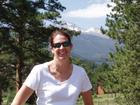
- SWS
- I am... a wife a daughter a sister/sister-in-law an aunt a reader a librarian a doctor a quilter a niece a grandmother ;-) a cat owner 6 feet 1 inches tall a yoga enthusiast a cook